Messolonghi – The Radiant “Sacred City” of Hellenism
Messolonghi is a journey that doesn’t end when you leave… it continues within you!
There are places that were not meant simply to be inhabited, but to test the limits of human life and dignity. Messolonghi is one of them—made sacred by self-sacrifice. The capital of the Aetolia-Acarnania regional unit, Messolonghi of the Exodus of the Free Besieged; Aitoliko, “the little Venice of Greece”; and Oiniades, with its important archaeological monuments, open up before us and captivate us with their natural beauty and their history reaching deep into the centuries. Messolonghi celebrates the 200-year anniversary with events throughout 2026 and invites us to visit—to pay homage, to taste it, to walk it, to swim, to take in its breathtaking nature and gastronomy, and to meet its wonderful, welcoming people.
Let’s start!
A Journey Through Messolonghi
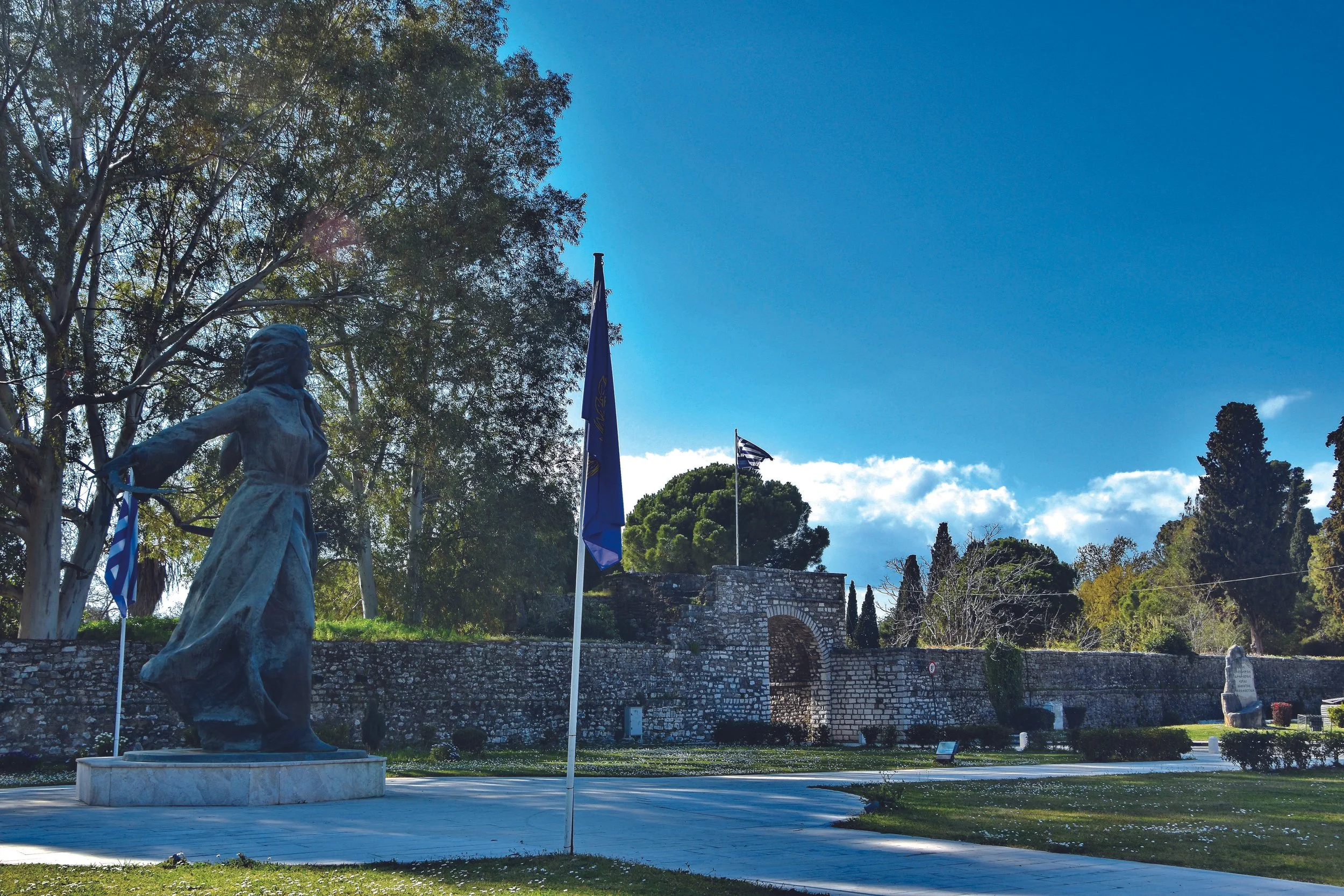
Built between lagoons—mezzo-laghi, as the Italians called it—Messolonghi is one of the finest destinations for every season. As you pass through the stone gate and enter the town, you’ll be struck by the Greek flags fluttering everywhere. After all, the Sacred City has been identified with the Revolution of 1821 more than any other place.
From the “Sacred City” to the waters, flavors, and landscapes of Aetolia.
A mosaic of experiences and sensations
The stroll continues at the city’s harbor, the sheltered marina with sailboats moored in place, the square with the Town Hall, and the pedestrian streets. Cafés and restaurants serving local specialties are everywhere.
We arrive in Messolonghi early, while the light is still soft and the town seems to be waking up quietly. We make our first stop at the Garden of Heroes. It isn’t just a walk; it’s a silent tribute. Among the memorials and the cypress trees, you realize that here the journey isn’t only geographical—it’s also inward. For accommodation, we choose a room at one of the many charming small boutique hotels or guesthouses in town, so we can feel its rhythm. Mornings begin with coffee by the lagoon, as the sun reflects on the water and fishermen return to their “pelades.” Next, we head to Aitoliko, the little islet connected to the mainland by two stone bridges. Time moves differently here. We wander the narrow lanes, breathe in the sea air, and try fresh fish at traditional tavernas. For a swim, we leave the lagoon behind and drive to the beaches of Louros or Dioni. Open, clear, with views over the Ionian Sea, they’re our summer reset. The water is clean, the landscape unpretentious, free of crowds and glamour.
A day trip to Oiniades is a must. Between ancient traces and fertile fields, we taste local flavors: eel, lagoon shrimp, Messolonghi bottarga, pies, and the region’s wine.
In the evening, back in Messolonghi, the sun sets slowly over the water. The town lights up discreetly, and as you walk, you feel that this place doesn’t say goodbye. It stays with you.
The Garden of Heroes
The first stop isn’t a “sight”. It’s a pause for remembrance. It was founded in 1830 by order of Governor Ioannis Kapodistrias. The wall that encloses it follows the line of the siege “fence” that Kioutachis so underestimated—and which became the grave of thousands of his soldiers. Walking along the broad stone paths through the gardens, you’ll see more than 50 monuments to Philhellenes and Greeks, the burial mound holding the bones of the unnamed heroes of the Exodus, and busts of Markos Botsaris, Alexandros Mavrokordatos, Dionysios Solomos, and Lord Byron, who died in Messolonghi in 1824.
200 Years Since the Exodus of the Free Besieged
Here, on the edge of the lagoon, in April 1826, the people of Messolonghi carried out the heroic “Exodus of Messolonghi”. Besieged by the Turco-Egyptian forces of Ibrahim and Kioutachis, they could no longer endure disease and hunger and made the hardest decision. During the Exodus, thousands of Greeks were massacred or taken captive. The Exodus of Messolonghi was a victory that changed the course of the Greek War of Independence and shocked Europe.
Messolonghi has a rare distinction: it is a city that –unlike all others– does not celebrate or honour any liberation. It honours its Exodus and its FALL. The FALL that liberated Greece.
In Messolonghi, the Philhellenes did not pass through as visitors—they put down roots. Lord Byron came to offer himself. Alongside him, other European intellectuals, benefactors, and fighters tied their fate to a small, besieged city that resisted.
Dionysios Solomos, without bearing arms, armed the language. From the shattering act of the people of Messolonghi were born the “Free Besieged”—one of the deepest poetic monuments of modern Greece.
Memory becomes image
The "Exodus of Messolonghi" on Delacroix’s Canvas
Eugène Delacroix’s iconic painting Greece on the Ruins of Messolonghi, housed at the Museum of Fine Arts in Bordeaux, will be presented at the Xenokrateio Archaeological Museum of Messolonghi.
The exhibition is held under the official organization and supervision of the Hellenic Ministry of Culture.
The "Daughter of Greece" in Messolonghi
At the Xenokrateio Archaeological Museum of Messolonghi, in collaboration with the National Historical Museum, two emblematic exhibits of exceptional historical significance will be showcased: David d’Angers’ sculpture The Daughter of Greece (also known as the Greek Girl), which formerly adorned the grave of Markos Botsaris in the Garden of Heroes, and the vestment of Konstantinos Xenokratis—the only surviving uniform of a member of the Sacred Band. These exhibits are directly tied to the historical memory of the Exodus and to Messolonghi’s identity, and the exhibition forms part of the official bicentennial program of the Ministry of Culture.
The original painting of the Exodus by Theodoros Vryzakis comes to Messolonghi
In collaboration with the National Gallery, the town will host the original painting “The Exodus of Messolonghi” by Theodoros Vryzakis, one of the most important works of 19th-century Greek historical painting. This landmark work captures, with dramatic intensity and national symbolism, the sacrifice of the besieged and stands as a foundational visual testament to the collective memory of the Greek Revolution.
Byron Society of the Sacred City of Messolonghi - International Research Center and Museum for Lord Byron and Philhellenism
A Beacon of Philhellenism in the Sacred City of Messolonghi
The Byron Society of the Sacred City of Messolonghi was founded in 1991 and serves as a hub of historical memory, research, and culture. A member of the International Confederation of Byron Societies, it strengthens Greece–UK ties; in 2025, its President and founding member Rodanthi Florou was honoured with an MBE (Member of the Most Excellent Order of the British Empire) by King Charles III.
The Research Center organizes international academic and student conferences, lectures, seminars, history-focused exhibitions, theatrical and musical events, and educational programs for students at all levels. It also carries out cultural exchanges and missions abroad, publishes historical guides, and develops collections dedicated to the Greek War of Independence and European Philhellenism.
The Museum, inaugurated in 2021, highlights Lord Byron’s life and lasting influence, presenting the Exodus of Messolonghi as a globally resonant symbol of freedom. Its model library of 3,000 titles, an evolving online digital archive project, open to the public free of charge, welcomes Greek and international students to the city where Byron breathed his last on April 19, 1824 (www.messolonghibyronsociety.gr / Tel. +30 26310 23174)
In the waters of the lagoon
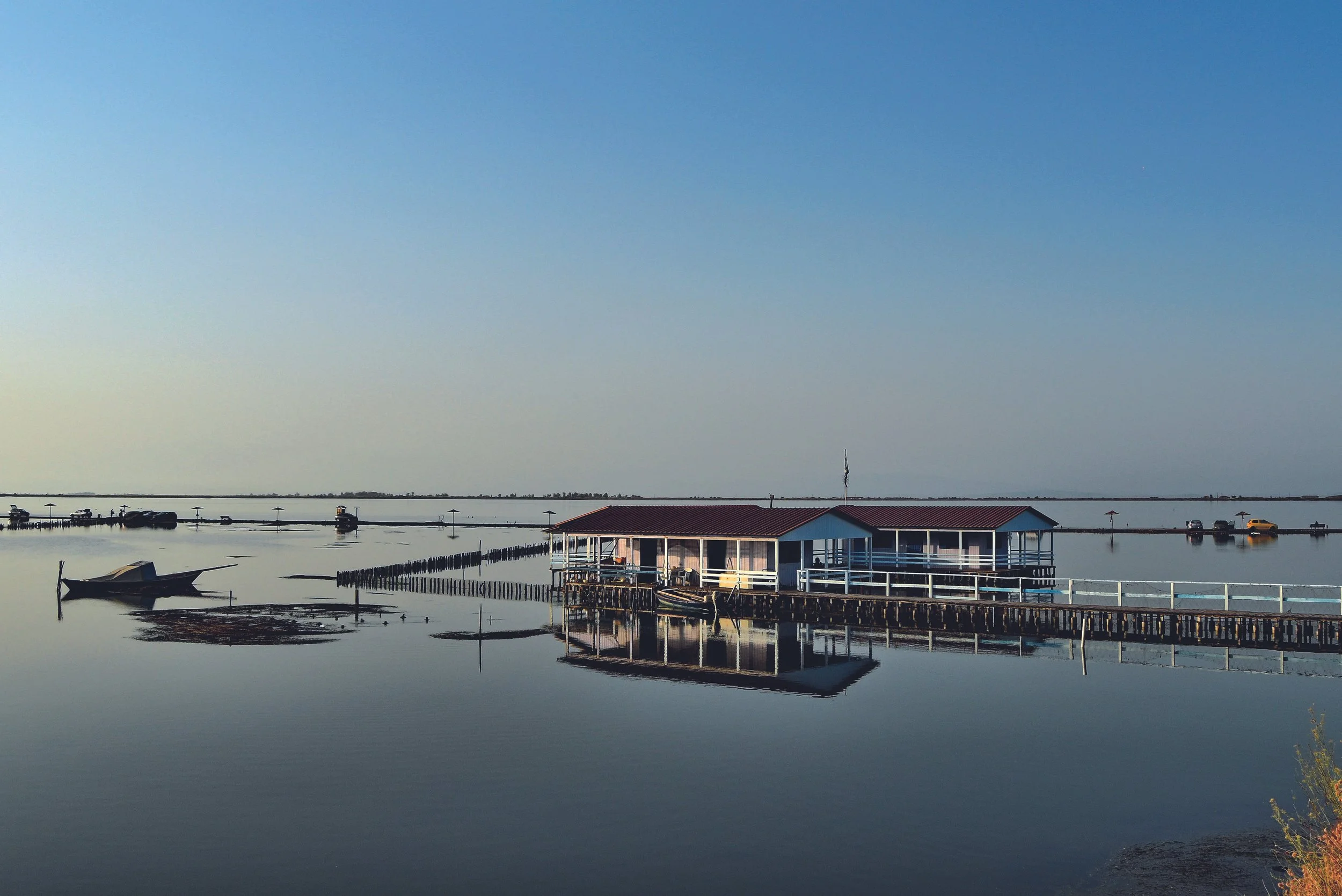
The "Pelades" of Messolonghi: The floating architecture of survival
They hover about half a meter above the water’s surface. The piles are made from swamp elms, resilient in water, and the supports are built from tamarisks—slender yet strong. In these huts, fishermen found shelter from sudden storms. Here, too, they gather in the evenings for ouzo and conversation—a tradition that endures as a living, functional part of modern life.
Exploring Messolonghi’s hidden treasures
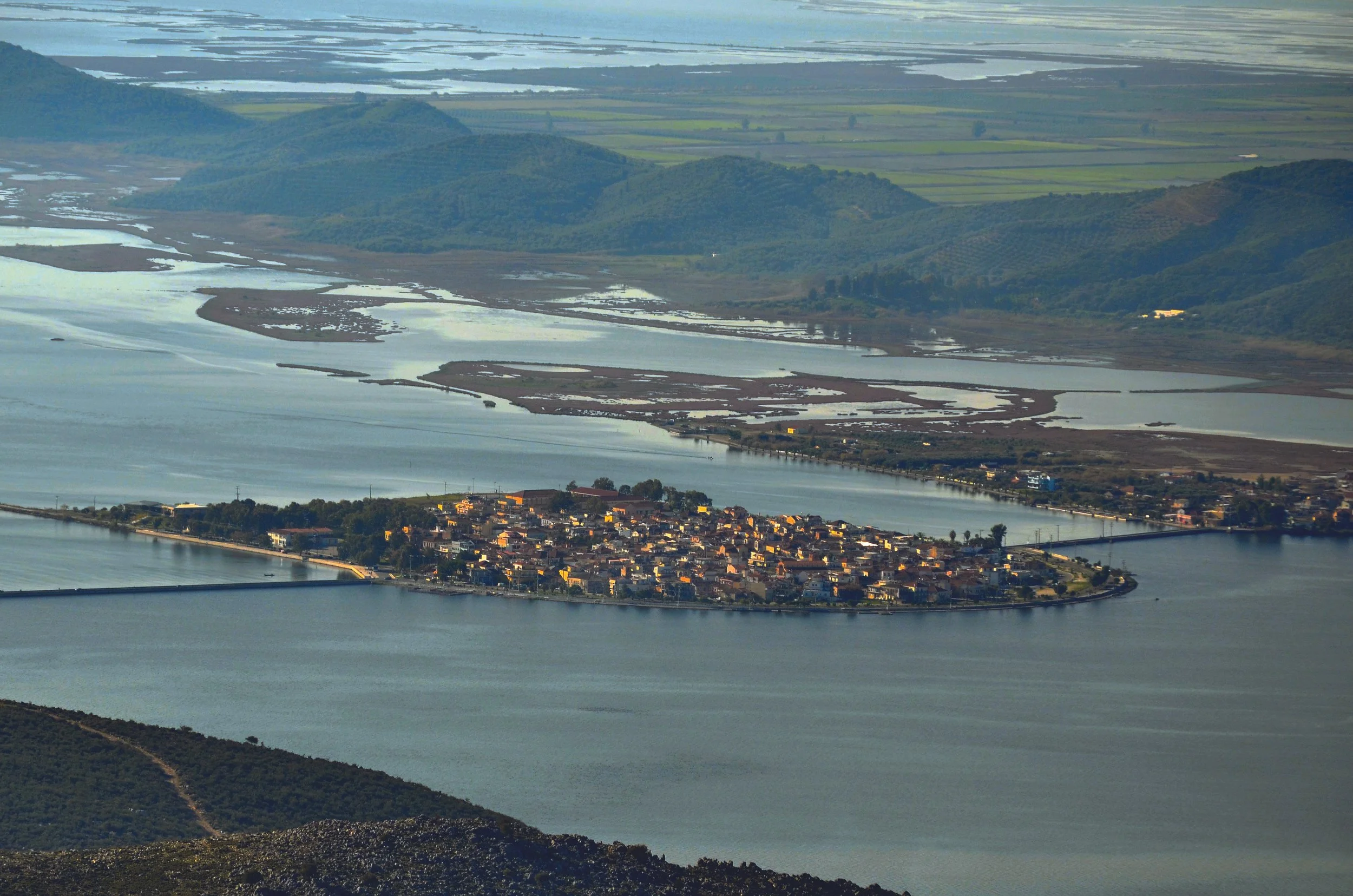
Aitoliko, also known as the “Little Venice”, is built on a small islet in the middle of the lagoon and linked to the mainland by two stone arched bridges.
A boat trip by gaita or Canoe–Kayak in Kleisova
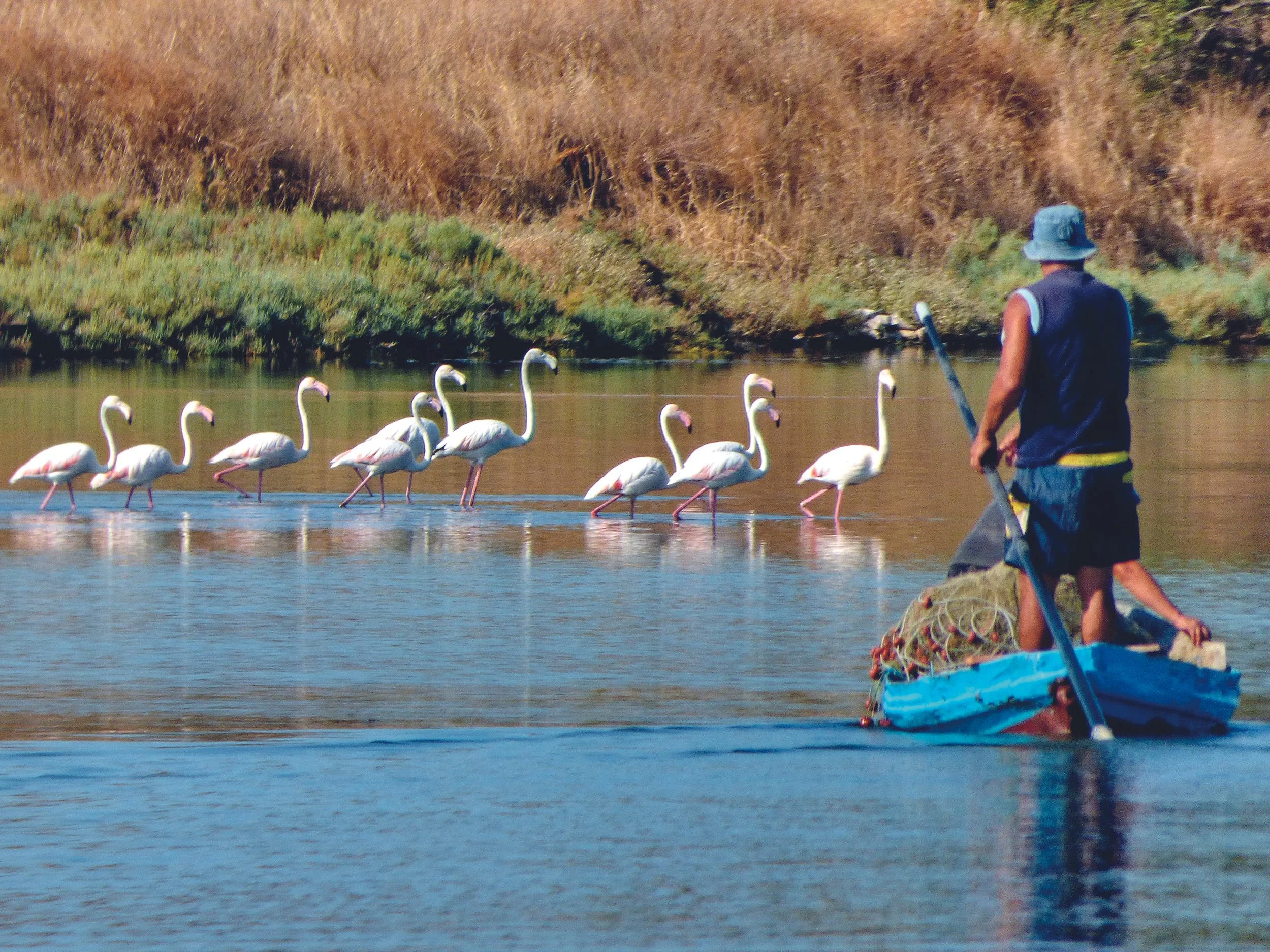
A watery oasis, a paradise for nature lovers. Travellers will feel the spellbinding stillness of this water landscape. In the Kleisova lagoon, kayaks glide silently through the channels, and the view unfolding before you takes you back to another era. If you have time, you can also experience fishing at the “pelades”, the fishermen’s traditional huts. Floating sightseeing routes are organized by boat or Canoe–Kayak to the small islets of Vasiladi, Komma, and Dolmas.
Birdwatching
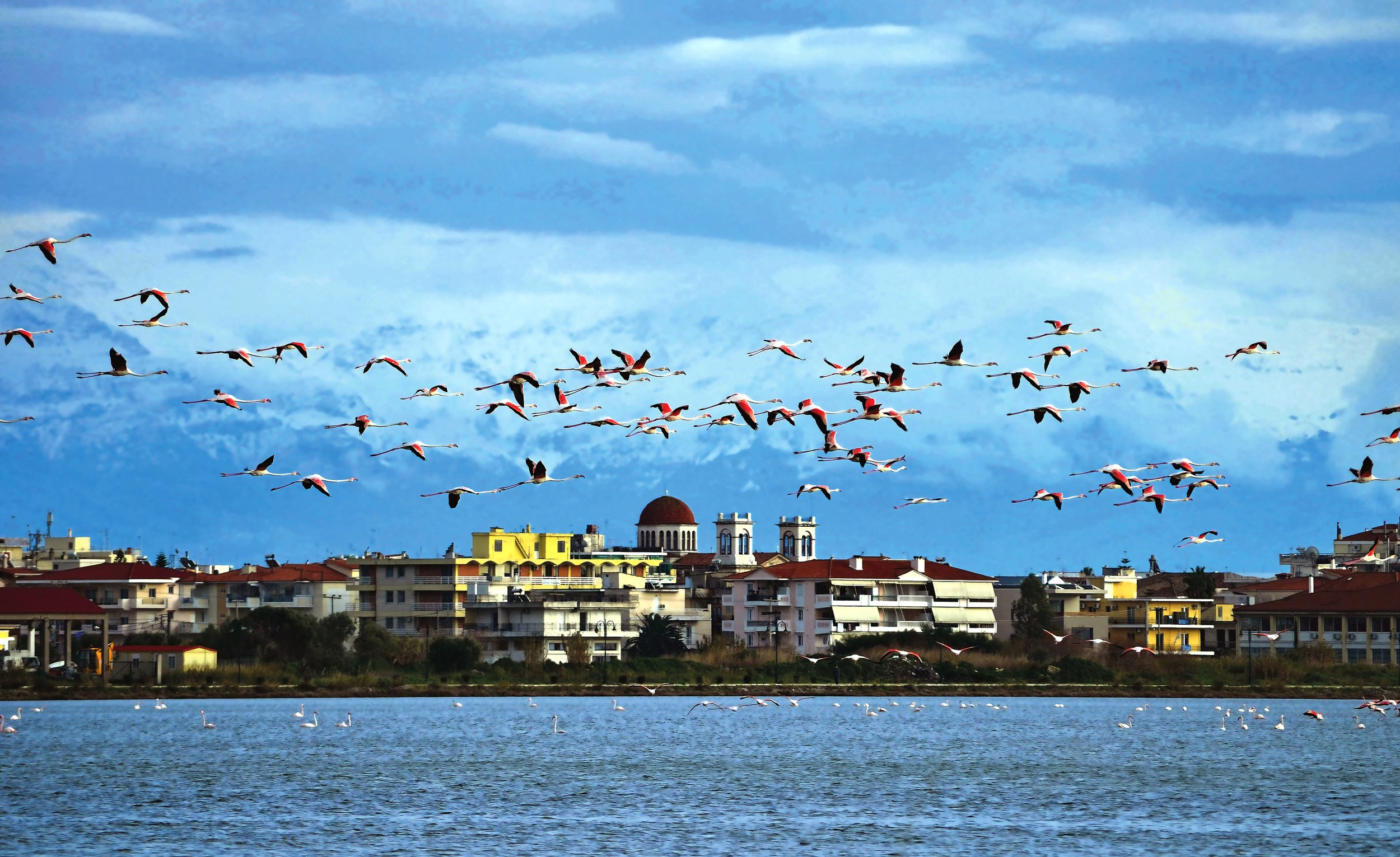
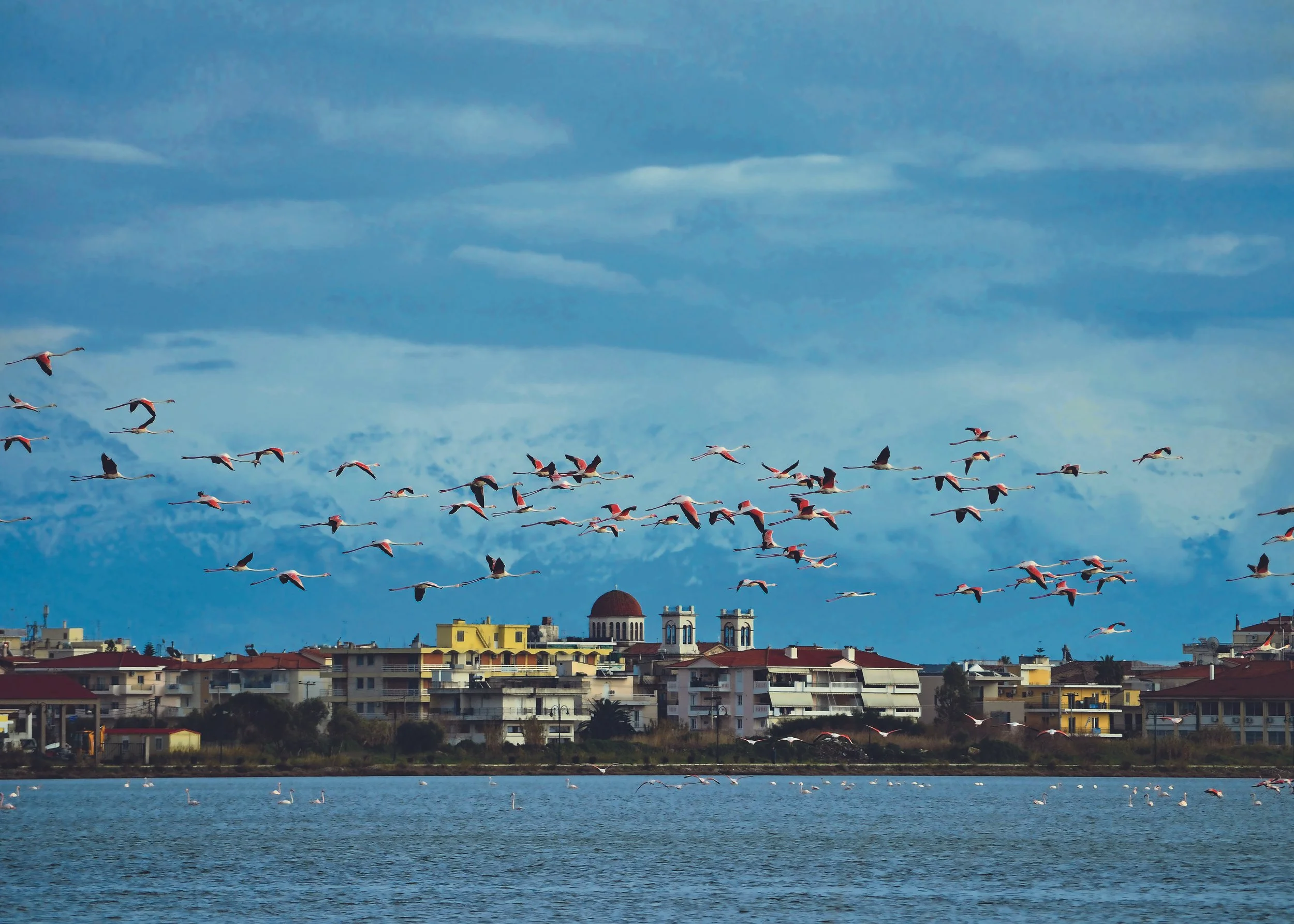
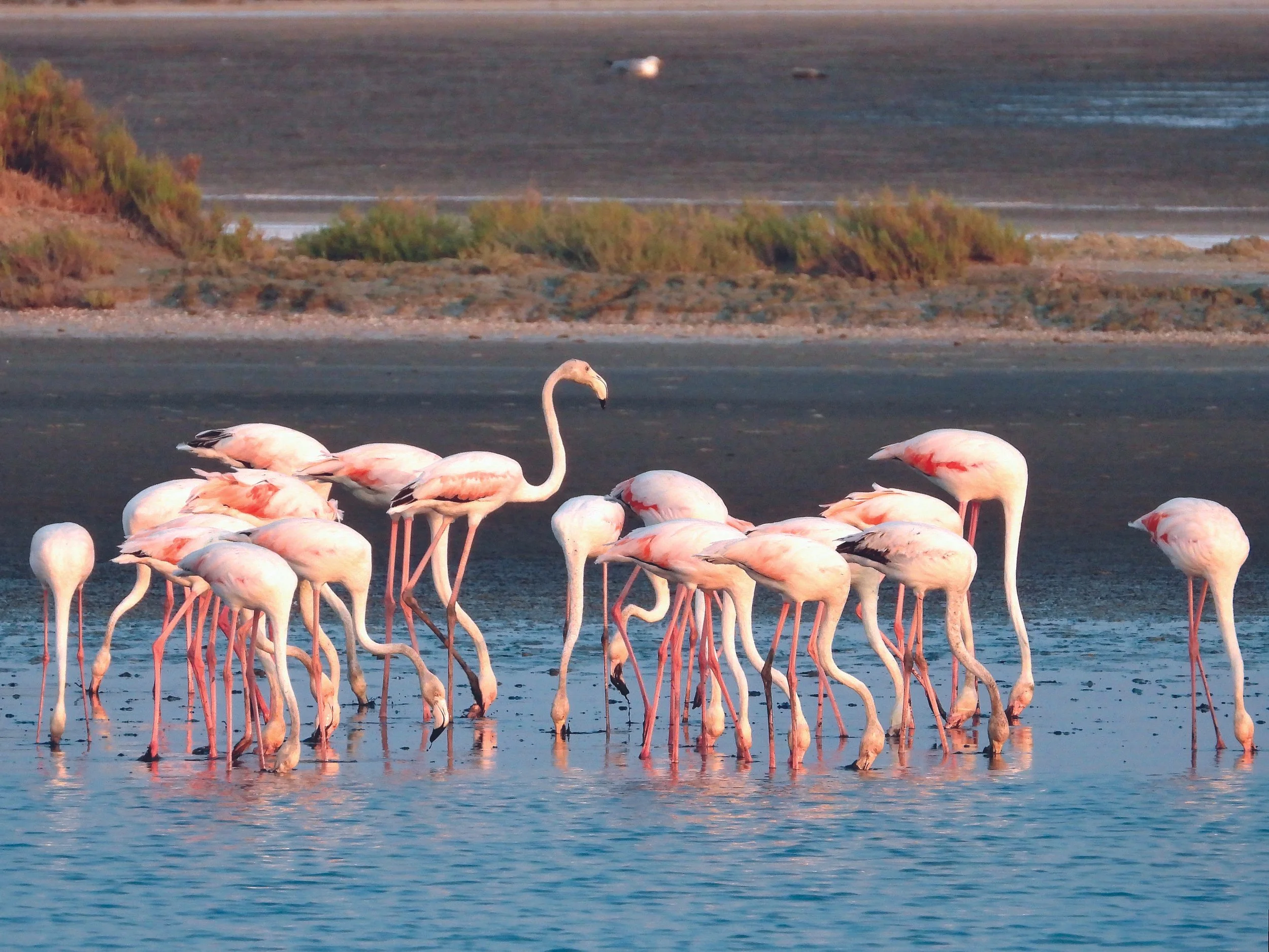
Leaving the town behind, the route to Tourlida opens up to striking scenes. Slender herons and flamingos stand unhurriedly in the shallow waters.
In the embrace of the Salt Pans - The white treasure that seasons life
Driving along the old Messolonghi–Aitoliko national road, you may be surprised by the small white hills of salt rising in front of you. The colours of the land where it meets the lagoon create a lunar landscape.
The Salt Museum
A journey into the world of salt—its history, its production, and its culture. Inside the museum, you’ll discover the range of salt’s colours, follow the production process, and learn about its more than 14,000 uses.
Other museums we recommend
Vasso Katraki Engraving & Printmaking Museum (Aitoliko)
A unique museum dedicated to printmaking, with a permanent collection of works by Vasso Katraki (Tel: +30 697 998 2029 / spyros-katrakis.gr/visit-us/)
Trikoupis Family Museum (Messolonghi)
A historic house museum featuring heirlooms and archival material from the Trikoupis family (Tel: +30 26310 26283, +30 26310 27268 / messolonghi-info.gr/en/museum-of-the-trikoupis-family/)
Aitoliko Fisheries Museum
A museum dedicated to traditional lagoon fishing, with exhibits and photographic material about fishing (Tel: +30 694 624 8095 messolonghi.gov.gr/?p=19217)
Nature, adventure, and land
Mountain biking and hiking on Mount Arakynthos - The enchanting centuries-old oak forest
Centuries-old trees with thick trunks rise towards the sky, forming a natural cathedral where the sounds of the forest blend like a choir. After reaching the picturesque mountain village of Ellinika, we walk through a woodland of ancient broadleaf oaks, with woodpeckers, orchids, and mushrooms. The trail offers sweeping views towards the Ionian Sea and leads to a cave where the coenobitic Monastery of Agios Nikolaos Kremastos was founded in the late 10th century.
The Fraxos Forest, “a paradise on earth”
A true kingdom of trees, plants, and wildlife, just 30 kilometres from Messolonghi. The forest is significant not only for Greece; it is of global scientific interest and was designated in 1985 as a protected “Monument of Nature”.
Katochi
In Katochi, the ruins of a medieval tower survive, known as the “Koulia of Lady Vasiliki”. The tower is dated to the second half of the 14th century. The Acheloos River and the wetland it forms, Louros beach, and the Fraxos Forest are just a few examples of the area’s natural beauty—internationally recognised protected sites that serve as a refuge for the region’s rare flora and fauna.
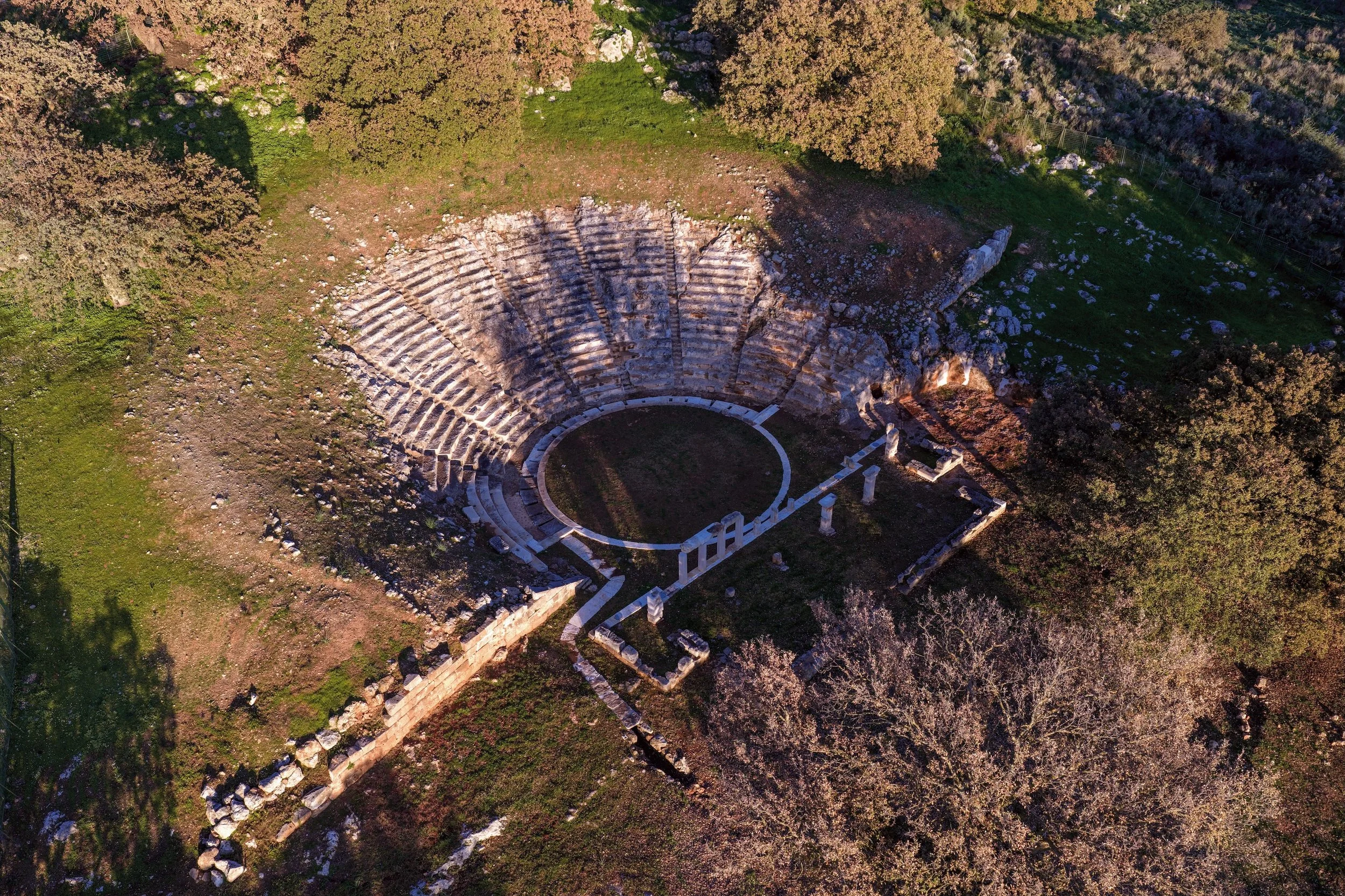
Oiniades
The classical remains of the ancient city of Oiniades—its theatre, temples, fortifications, and the city’s shipyard—attest to the strategic importance it held in antiquity.
Art and tradition
A visit to the two traditional costume workshops in the area, those of Zoi Steliou (Messolonghi) and Nikos Plakidas (Katochi of Oiniades), will reward anyone interested in the folk tradition.
Sea and summer
Louros beach
A narrow strip of land separating the shallow waters of the Messolonghi lagoon from the Ionian Sea forms Greece’s longest beach, stretching for about 17 kilometres, and is protected under the Ramsar Convention for its uniqueness and its value as a habitat. Here you can enjoy the endless sand and deep-blue waters near the area’s beach bars, or in a more unorganised section of the beach, under the natural shade of the trees.
Dioni for swimming and kitesurfing
Dioni Beach, south-west of Katochi, part of the Messolonghi–Aitoliko Lagoon National Park, is considered one of the world’s best spots for kitesurfing.
Messolonghi by locals
Messolonghi By Locals is a non-profit run by local youth, promoting and protecting local heritage through alternative cultural tourism and ecotourism.
(messolonghibylocals.com)
Messolonghi’s Gastronomy - Flavours and scenes
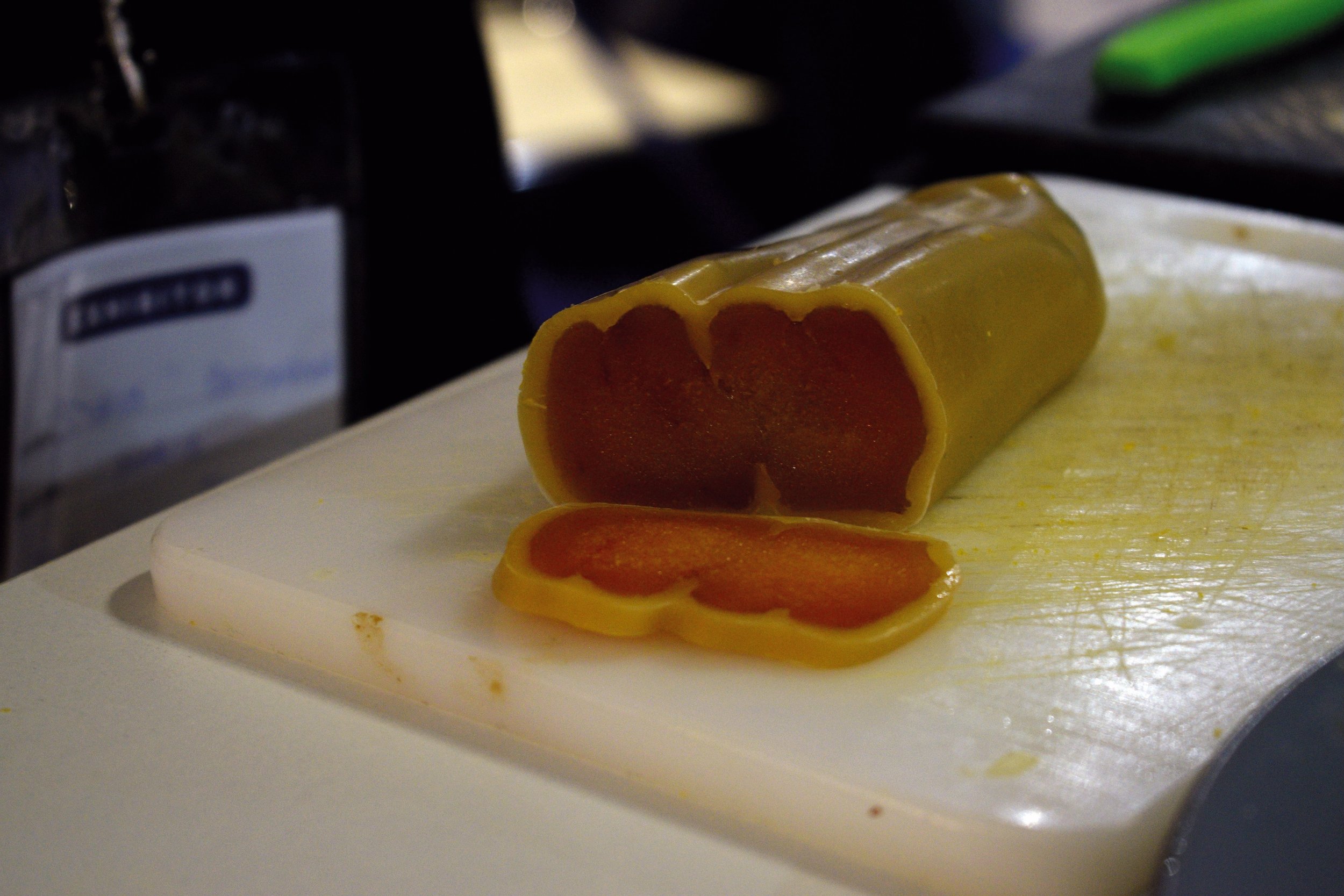
Fresh fish, shellfish, and the distinctive bottarga—the “gold” of the lagoon, also known as Greek caviar—are the foundation of Messolonghi’s cuisine. Here, time isn’t measured by the clock, but by the seasons of production: bottarga season, salt season, sea bream season, sea bass season. In the area, you can also join guided experiences focused on local gastronomy:
· A visit to a bottarga workshop, where you can see every stage of bottarga production and packaging up close.
· A visit to olive mills.
· A visit to wineries, where you can taste local varieties of wine and tsipouro.
FOTINI ANDROULAKI
VOLTA Magazine
35 Eressou str., Athens 10681
Mob. + 30 6944 575962