
How Chelsea Corporate Builds Diverse Teams Through Merit-Based Recruitment
Why practical challenges, real-world simulations and a focus on ability are transforming talent selection in M&A advisory.
Imagine presenting what appears to be an excellent business acquisition. Strong financial performance, an established customer base and promising growth prospects. Everything seems to point towards an attractive investment.
Then someone places a card on the table revealing a substantial, previously undisclosed tax liability.
You have three minutes to defend your position.
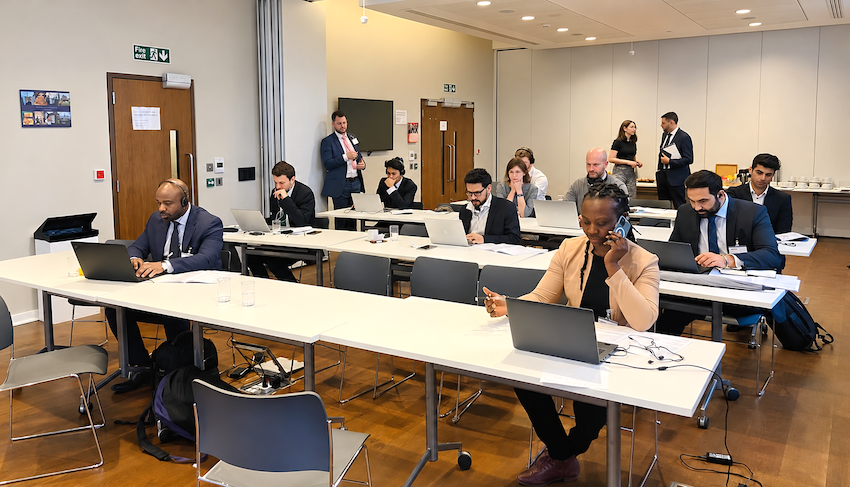
It might sound like an unusual job interview, particularly for an M&A advisory firm. Yet this is one of the scenarios we've introduced into our recruitment process at Chelsea Corporate during an Open Day.
And behind the unconventional format lies a serious objective: understanding how people think, make decisions and respond to the challenges they might encounter in their professional lives.
The challenge of identifying talent
Finding the right people has never been as simple as finding the most impressive CV.
Proactivity, relevant experience and technical expertise remain essential, particularly in a domain where clients rely on sound commercial judgement and professionalism.
Traditional interviews provide valuable insight, yet they also have a familiar limitation: candidates are often assessed on how well they explain what they would do, rather than demonstrating how they would actually approach a situation. A strong track record cannot always reveal how someone will perform in a new environment.
We wanted to explore that distinction.
At Chelsea Corporate, our work involves identifying acquisition opportunities, understanding businesses, managing relationships and navigating negotiations. It requires analytical skills, but also the capacity to interpret incomplete information, challenge assumptions and communicate effectively.
These are qualities worth assessing in the context in which they will actually be used.
Skills in action
Candidates take on the roles of buyers, sellers and advisers, working through exercises based on situations they might encounter in buy-side M&A. They assess potential acquisitions against a buyer's criteria and negotiate transactions in which valuations, risks and competing interests all need to be considered.
What interests us is how candidates approach each exercise, the reasoning behind their decisions, how they communicate and how they respond when circumstances change.
The talent we might have otherwise missed
Women now represent 35% of our team at Chelsea Corporate and ages range from 23 to mid-sixties. Twelve different languages spoken at home by our team of 20. In an industry that has traditionally been dominated by a narrow demographic, it's an outcome we're particularly pleased with.
Placing greater emphasis on practical ability gives candidates the opportunity to demonstrate strengths that might not be immediately apparent on paper. People who have spent decades in business work alongside those at the beginning of their careers, bringing different experiences and approaches to the same discussions.
That doesn't mean everyone agrees, of course. Nor should they. In a profession where assumptions need to be questioned and commercial decisions carefully considered, a range of opinions can be extremely useful.
Focusing strictly on aptitude can reveal strengths that might be overlooked in a conventional interview. We've been able to identify high-quality candidates without changing the standards we expect.
The aim has never been to recruit to a particular profile, we’ve never implemented a diversity policy, for that would be the very opposite of meritocratic. The objective has always been to avoid overlooking capable people simply because their strengths aren't immediately apparent on paper.
The Importance of getting it right
There is no perfect formula for identifying talent. A successful simulation cannot guarantee success in a professional role, just as an excellent interview cannot examine every challenge someone might face.
Recruitment decisions carry long-term consequences. The people who join a business influence its performance, its client relationships and its ability to grow.
Our Open Days help us assess candidates more thoroughly while giving them a clearer idea of the work they might be doing. It's a useful exchange, and one that has already shaped the team we're building.
As we join Vivanova, it seems fitting that our first contribution should focus on the people behind Chelsea Corporate. The club brings together individuals from a wide range of industries and backgrounds, and we're looking forward to learning more about the people and experiences that make up the community.
And perhaps that's a question worth putting to our fellow members: when you're looking for new talent, how do you recognise the qualities that might never appear on a CV?
By Thomas Biley, Director, Chelsea Corporate
Get to know our team a little better by visiting our company page
Chelsea Corporate Ltd (London)
Level 30, The Leadenhall Building,
122 Leadenhall Street,
London EC3V 4AB
Chelsea Corporate Holdings (Hong Kong)
Unit A, 20/F., South Island Place,
8 Wong Chuk Hang Road,
Wong Chuk Hang, Hong Kong