Mystras: The Glorious Byzantine Castle City
The «Apple of Discord» among Franks, Venetians, Byzantines, and Ottomans. The capital of the Despotate of the Morea. A living legend in the heart of the Peloponnese, where history has never ceased to breathe through stone walls, fortifications, and silence. Triumphant victories, humiliating defeats, intrigues, and conspiracies weave together the rich tapestry of a place that once flourished as a political center, a spiritual beacon, and the stage for some of Byzantium’s most defining historical turning points. This year, Mystras unveils a remarkable new chapter in its story. The doors of the Palace of the Despots, closed to the public for nearly forty years, have reopened, revealing once again the splendour of a Byzantine imperial court that seemed lost to time. It is a rare invitation to journey back to the heart of Mystras’ imperial identity—a place where the past does not merely tell history; it brings it vividly to life.
Driving to Mystras
We leave behind the quiet gardens with magnolias and roses that adorn the courtyards of the last houses of Sparta. Gradually, the landscape changes. Olive groves dominate, reminding us of the fertility of a land that has never stopped nourishing history and life.
Modern Mystras
Just before reaching the Castle City, modern Mystras appears discreetly on the horizon. Stone houses, small architectural contrasts, and a square shaded by plane trees compose the first impression.
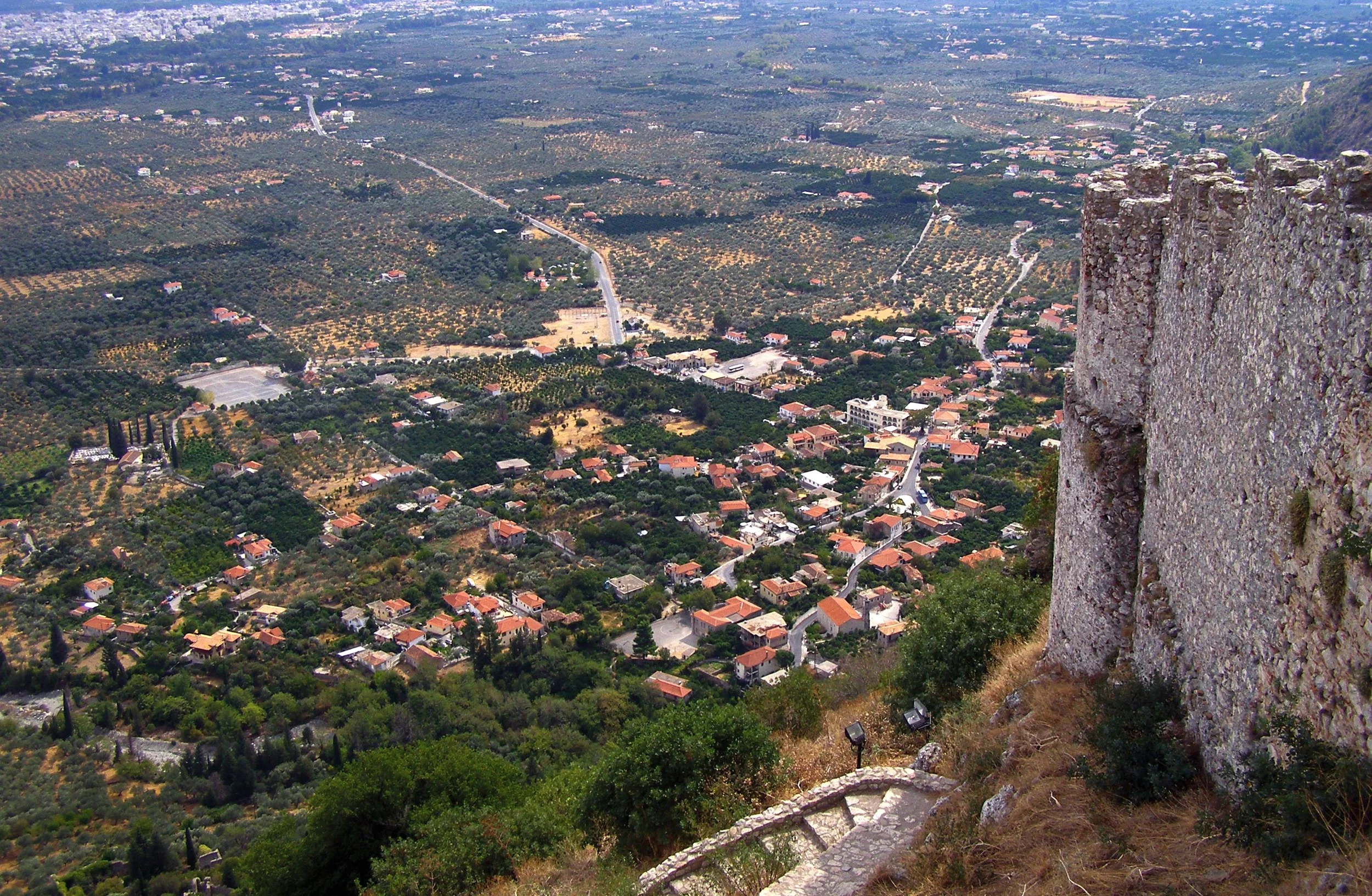
After the Battle of Pelagonia, Michael VIII Palaiologos prevailed over the Franks and Mystras gradually came under Byzantine control. In an age of insecurity, inhabitants of ancient Sparta and the surrounding area found refuge within its walls, transforming it into a living center of Byzantine Peloponnese.
Exploring the Upper and Lower City of Mystras
Upon arriving at the medieval Byzantine city of Mystras, you must choose how to begin your tour. There are two entrances: the first, the “Main Gate,” located at the lower part of the city, while the second, several kilometers higher, offers easier access to the castle and the palaces.
The Metropolis and the Spiritual Wealth of the Place
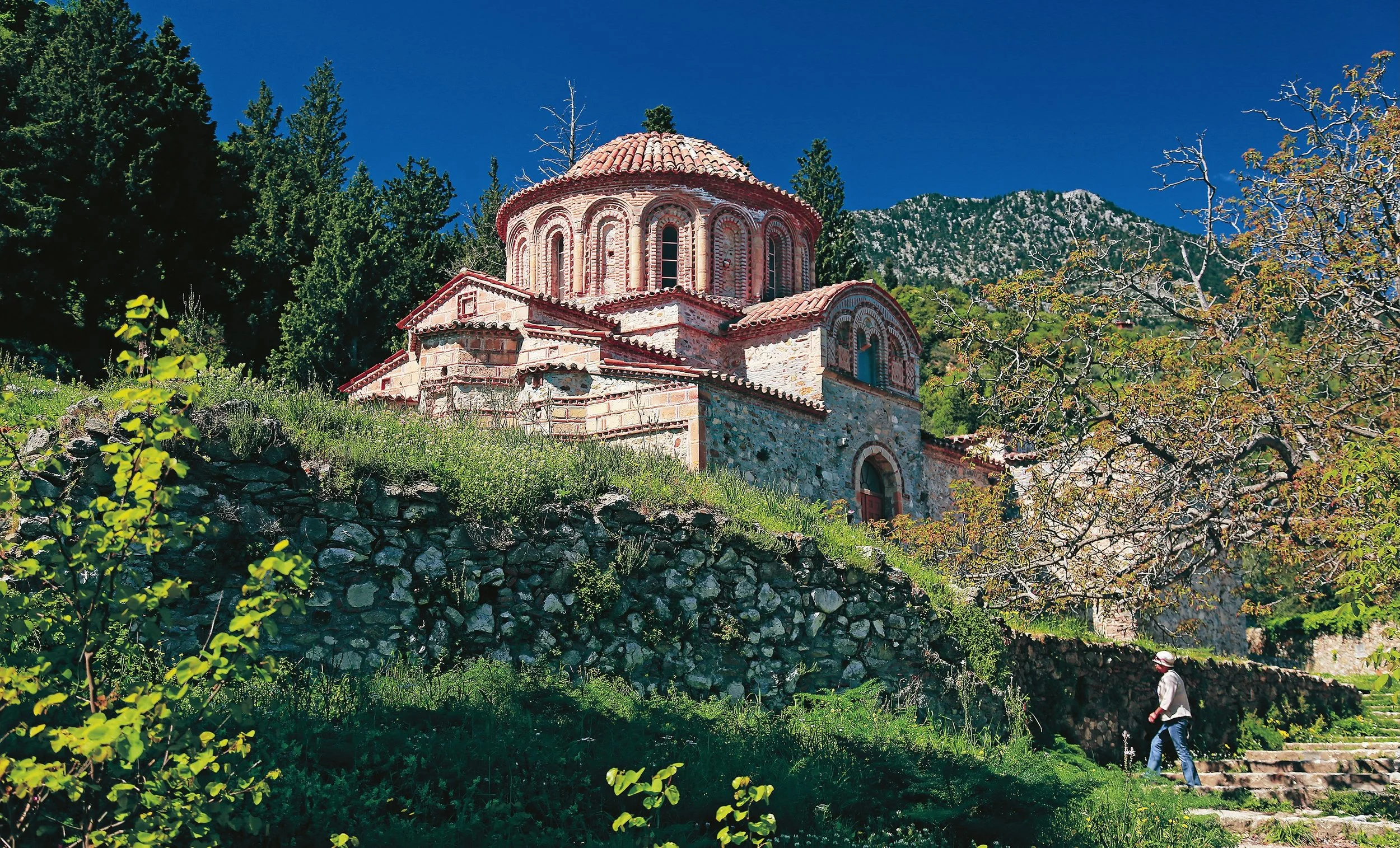
Walking to the right, we arrive at the Metropolis of Mystras, the Church of Saint Demetrios with its beautiful frescoes, where, according to tradition, Constantine Palaiologos was crowned emperor.
The Upper City and the Palace of the Despots
We ascend toward the Upper Gate to encounter Hagia Sophia, also known as the “miniature Hagia Sophia of Constantinople.” The next stop is the Palace of the Despots of Mystras.
The Holy Monastery of Pantanassa
Founded around 1428 by John Frangopoulos, a high-ranking official of the Despotate of the Morea, it is considered the only Byzantine monastery in Mystras that maintains an uninterrupted monastic life to this day.
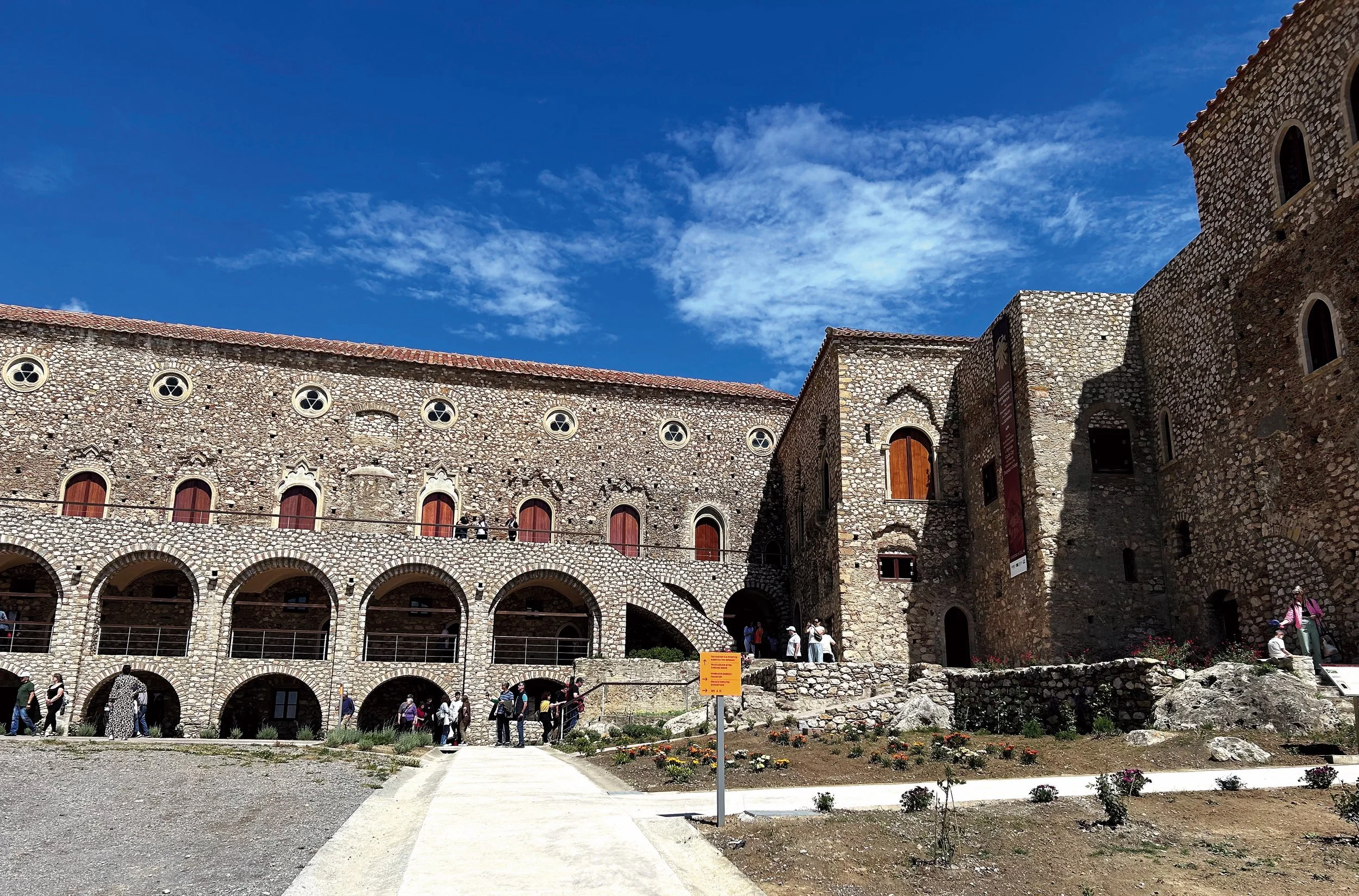
With the palace’s addition, it only added another reason to visit the hidden city. I felt the palace gave a renewed life to Mystras. Using historical sources, they were able to be as accurate as possible with its reconstruction. As the only surviving imperial palace in Greece, there were projectors displaying moving shadows carrying out tasks as they would during the empire’s existence, and interactive screens visitors could use that gave further education to historical topics. Although there are many levels to the palace, I was looking forward to the throne room.
All the clothing was created by hand with the help of the nuns from Mystras’ monastery using primary source material with the help from historians. The inclusion of an AI reconstruction presentation that showed what life could have been like for the emperor.
Georgios Gemistos – Plethon, “The Last philosopher”
In Mystras also lived the last great philosopher of Byzantium, Georgios Gemistos Plethon. Teacher, judge, and above all thinker, he believed that the Peloponnese was the cradle of the Hellenic spirit and that from here the rebirth of the Empire could begin. In 1975, the philosopher and academic Ioannis Theodorakopoulos founded the School of Philosophy “O Plethon” in Magoula, Sparta, honoring his memory.
Travel Article by VOLTA
VOLTA goes beyond traditional magazine stands, finding its way into the lounges of Greece’s most prestigious 5-star hotels, elite clubs such as the Ecali Club, Amarousi Equestrian Club, and the Shipowners Club, and high-end yachting and marine venues. In addition, the magazine’s digital issues reach business circles in New York and Boston, reflecting its status as a publication for the global elite.
Through VOLTA, readers step into a world of the art of living, where every page serves as an invitation to indulge in the exceptional.
Contact email
Website
LinkedIn
Facebook
Instagram
Print Version