Interview

The Intersection of Italian Cinema and Luxury: An Executive Q&A with Marco Soriano

The Intersection of Italian Cinema and Luxury: An Executive Q&A on SORIANO's 2026 Film Debut & Docufilm ft. Arius Technology.

Independent cinema constantly seeks new ways to engage modern audiences without compromising artistic integrity. Many filmmakers struggle to integrate brand aesthetics naturally into their storytelling. Forced product placements often disrupt the narrative, leaving a gap where organic visual collaborations should exist.

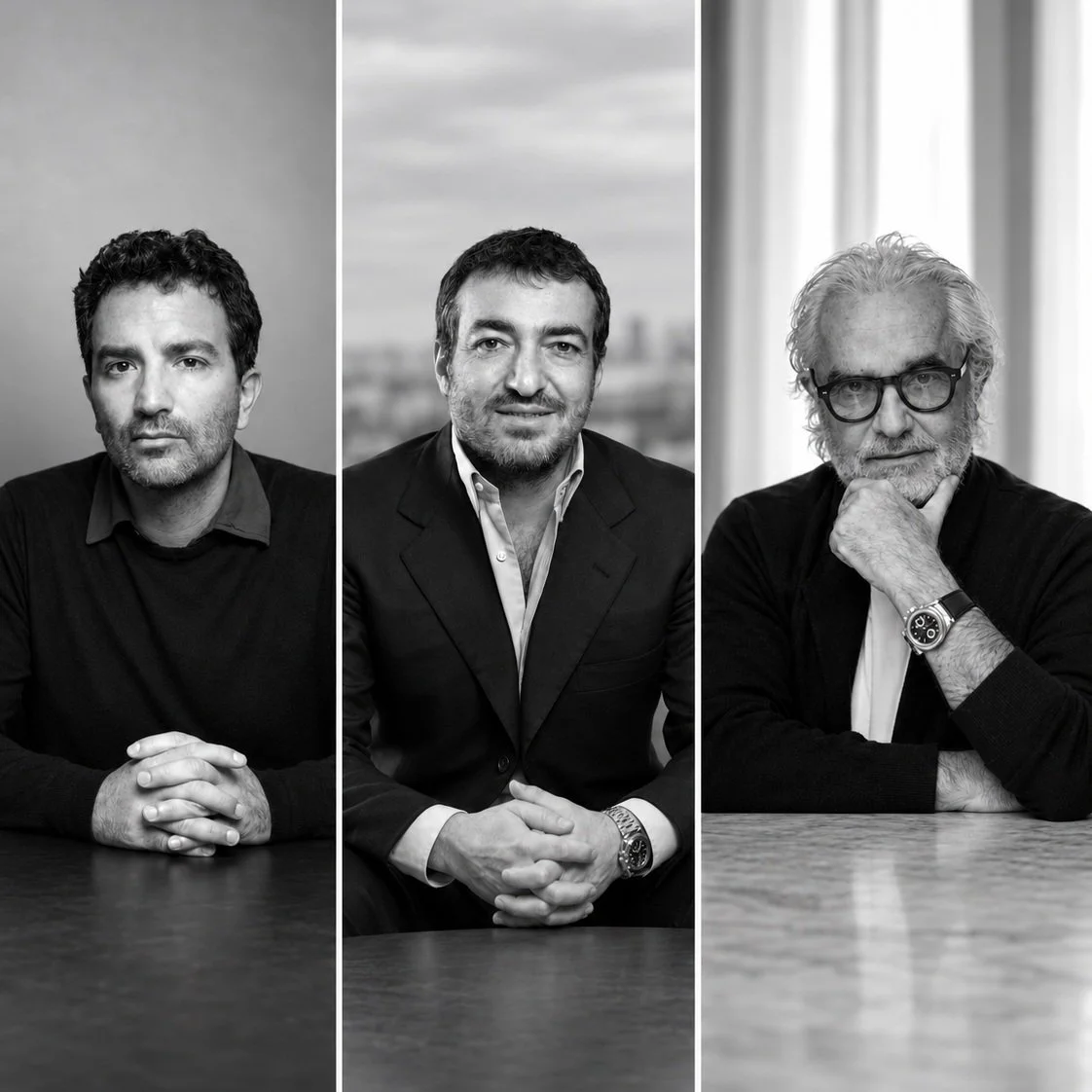
To bridge this gap, a highly anticipated Italian independent film debuting in 2026 directly connects luxury innovation with emotional depth. Produced by Laura Tirassa and directed by Andrea Castoldi, the film features the on-screen debut of SORIANO motorcycles and its modern clothing line. In this interview, Marco Antonio Soriano shares how this unique partnership blends mechanical power with narrative storytelling and highlights the performance of rising star Denise Tantucci.

Soriano also reveals a second chapter of the collaboration, featuring Arius Technology in a docufilm about protecting global cultural heritage through technology and innovation. 

Q: The upcoming 2026 independent film marks SORIANOโ€™s official debut in narrative cinema. What inspired the decision to bring your motorcycles and clothing line onto the big screen?

Marco Antonio Soriano: For us at SORIANO, stepping into narrative cinema was never about executing a traditional product placement. When Andrea Castoldi and Laura Tirassa approached us, we realized this was a unique opportunity to use our brand as a true storytelling device.

The inspiration to bring our motorcycles and apparel to the big screen boils down to a few core passions of mine:

  • A Shared Vision of Reality: We saw this film as a mirror reflecting the struggles and innovations of our time. We didn't want to just slap a logo on a jacket or park a bike in the background; we wanted our engineering and aesthetic to be a living extension of the protagonist's journey.

  • Embodying the SORIANO Ethos: When you see an absolute force like Denise Tantucci on screen, standing before a machine built for the future, she captures our spirit perfectly. The motorcycle isn't just a vehicleโ€”it represents her steering her own destiny, adapting, and moving forward with purpose.

  • Addressing the European Youth Exodus: This is perhaps the most profound inspiration for me. We are using this cinematic platform to shine a spotlight on the quiet crisis of our "brain drain." It breaks my heart to watch our brightest young minds pack up and leave our beautiful, historic towns for larger capitals because they feel the dynamic economy they need is missing at home. We wanted to ground this story in the very real, emotional conflict of a generation forced to choose between their roots and their potential.

  • A Message of Defiance and Hope: Ultimately, our cinematic debut is a statement. By integrating our cutting-edge designs into the film and actively investing in the local creative economy, we are sending a clear, defiant message to our youth: The future does not have to be imported, and you do not have to leave home to find it. We canโ€”and we willโ€”build it right here.

Q: Integrating luxury brands into film requires a delicate balance. How does the bold aesthetic of SORIANO naturally complement the emotional depth of the story?

Marco Antonio Soriano: You are entirely right; there is a very delicate balance to strike. If not done with intention, a luxury brand can easily distract from the narrative rather than enhance it. For us, ensuring that SORIANOโ€™s bold aesthetic naturally complemented the filmโ€™s emotional depth meant making our designs an active participant in the story rather than just a visual prop.

Here is how our aesthetic naturally intertwines with the emotional weight of the film:

  • An Extension of the Protagonistโ€™s Journey: We designed our integration so that our engineering and aesthetics serve as a physical manifestation of the main character's internal world. When you look at our motorcycles and apparel, you are seeing an extension of her personal journey, not just high-end set dressing.

  • Visualizing Resilience and Destiny: Our brand's striking industrial design perfectly mirrors the modern, resilient imagery of the youth this film portrays. When Denise Tantucci's character stands before a machine built for the future, her boldness matches the machineโ€™s. She isn't just sitting on a luxury bike; the aesthetic reinforces the emotional reality that she is actively steering her own destiny.

  • A Symbol of Defiance and Hope: The emotional core of this film is the painful choice between staying in one's hometown or leaving for better opportunities. In this context, our bold designs become a statement of defiance. The motorcycle represents traditional freedom, certainly, but it also represents the tangible power to commute, connect, and drive meaningful change locally.

  • Adapting with Purpose: When Denise is outfitted in our modern clothing line, it visually communicates a crucial narrative point: she isn't just surviving this quiet crisis of the youth exodus. She is adapting, evolving, and moving forward with profound purpose. The luxury and innovation of the brand highlight the exact kind of dynamic ecosystem we want our youth to know they can build right at home.

Q: Collaborating with producer Laura Tirassa and director Andrea Castoldi brings a specific vision to life. How did their approach align with the modern industrial artistry of your brand?

Marco Antonio Soriano: It was a remarkably seamless alignment from our very first conversation. When Andrea and Laura approached us, we realized almost immediately that their cinematic vision and our industrial philosophy were speaking the exact same language. They were not looking for superficial props, and we were not looking for traditional product placement.

Here is how their directorial and production approach perfectly aligned with our modern industrial artistry:

  • A Commitment to Authenticity: Andrea and Laura wanted our engineering and aesthetic to be an active, living extension of the protagonistโ€™s journey. This mirrored our own desire to ensure our brand is integrated organically, moving beyond just slapping a logo on a jacket or parking a motorcycle in the background.

  • Fusing Tradition with Innovation: Their approach beautifully preserves traditional cinematic artistry while embracing new narratives. This is the exact blueprint of our purpose-driven manufacturing at SORIANO. Just as they blend classic storytelling with modern realities, we are deeply committed to marrying cutting-edge EV technology with traditional Italian craftsmanship.

  • Reflecting Real-World Struggles: Their vision for the film was to create a mirror reflecting the realities, struggles, and innovations of our timeโ€”specifically the quiet crisis of the European youth exodus. This perfectly matched our brandโ€™s core mission of using social and mechanical engineering to create ecosystems that make our youth want to stay.

  • Championing the Local Creative Economy: By collaborating with these incredible independent filmmakers, their production approach aligned seamlessly with our philanthropic pillars. We both share a fundamental belief in injecting capital and resources into the local arts, proving that world-class cinema, much like world-class transportation and fashion, can be built right here in Italy without needing to export our talent.

Q: The film features rising star Denise Tantucci, known for balancing vulnerability with strength. How does her performance anchor the dynamic between speed and silence presented in the film?

Marco Antonio Soriano: Denise is, simply put, an absolute force on screen. The dynamic between speed and silence is central not only to the filmโ€™s emotional landscape but also to the very machinery she commands. Her ability to balance that vulnerability with immense strength is what grounds the entire narrative.

Here is how her performance anchors that profound dynamic:

  • The Silence of the "Quiet Crisis": Denise brings a poignant vulnerability to the screen that captures what I call the "quiet crisis" of our timeโ€”the silent, heartbreaking exodus of our brightest young minds leaving their historic towns. The quieter moments in her performance reflect the deep, internal emotional conflict of a generation forced to choose between their roots and their potential.

  • The Speed of Steering Her Destiny: Contrasting that quiet vulnerability is her undeniable strength. When you see her standing before a machine built for the future, she embodies the speed of progress and resilience. She isn't just passively riding a bike; she is actively and powerfully steering her own destiny, ready to take on the world.

  • Mirroring the EV Ethos: The juxtaposition of speed and silence is also a direct reflection of our cutting-edge SORIANO EV motorcycles. They operate with silent electric precision, yet they deliver immense, raw power. Denise's character channels this exact energy. She represents a modern, resilient youth who can harness that quiet power to drive change and commute locally.

  • Adapting with Purpose: Ultimately, her performance asks the heaviest questions of the film: Where is she going, and why does she have to leave? By balancing the quiet reflection of her circumstances with the fast-paced momentum of her journey, she shows us a protagonist who isn't just surviving. She is adapting, evolving, and moving forward with absolute purpose.

Q: You emphasize that Italyโ€™s rich cinematic tradition does not fade, but evolves. How do you see this film setting a new standard for future collaborations between independent cinema and luxury brands?

Marco Antonio Soriano: I am thrilled you brought that up. The synergy we have found with Andrea and Laura goes far beyond a single narrative feature. We are already laying the groundwork for a highly anticipated docufilm with their production house that explores an entirely different, yet equally vital, form of cultural preservation.

Through our deep partnership with Arius Technology, where I serve as Global Ambassador and CEO for Europe, we are utilizing the world's most advanced 3D laser scanning systems to literally digitize the "DNA" of human history. This upcoming docufilm will chronicle our journey of creating flawless "Digital Twins" of priceless masterpieces.

Here is how our future with this production house and Arius Technology is taking shape:

  • Global Preservation on Film: The docufilm will take audiences behind the scenes of how we are safeguarding human heritage. We are capturing every microscopic brushstroke and texture of masterpieces located in the most noticeable museums all over the worldโ€”such as our recent landmark digital preservation of Rome's Galleria Borghese.

  • Securing Assets for Collectors and Institutions: Beyond public museums, the documentary will explore how this technology is becoming the new global standard for private collectors and major financial institutions. We are giving them the ultimate tool for forensic authentication, ensuring their most precious assets have an eternal, immutable backup.

  • A Continuous Narrative of Innovation: Andrea and Laura understand that whether we are engineering EV motorcycles to empower the youth or using laser technology to save a Caravaggio, the core SORIANO ethos is the same: Innovation through Heritage. Their cinematic lens is the perfect vehicle to show the world how we are bridging 21st-century technology with classic artistry.

  • Accessibility for All: Ultimately, the docufilm will highlight the democratization of high art. By creating ultra-fidelity E-Clones of these masterpieces, we can foster global, immersive exhibitions without ever risking the original works.

This docufilm represents the next chapter in our collaboration. We aren't just telling stories about the future anymore; we are actively documenting how we are securing the past for generations to come.

As audiences demand more authentic visual experiences, natural brand integration will become a crucial element of modern filmmaking. Collaborations like this preserve traditional cinematic artistry while introducing innovative aesthetics. This project establishes a clear blueprint for the future of European independent film.

About Arius Technology

Arius Technology, headquartered in Vancouver, Canada, and Milan, Italy, with offices in London and New York, is the leading innovator in high-resolution colour 3D scanning for the preservation, tokenisation, and reproduction of fine art. Originally designed to forensically scan the Mona Lisa, the technology has evolved to provide an immutable bridge between the Physical and Digital world.  Arius is utilised by leading museums and global art collectors to digitally safeguard works of art and make them accessible through digital archives, research platforms, and high-fidelity prints. Arius redefines how collectors, institutions, and the public experience and interact with cultural heritage in the 21st century.

Contact Arius Technology
Website
LinkedIn 
YouTube
Instagram
X

Volta Magazine Interviews Maria Nerantzaki - Founder & President of Hellenic Cultural Bridge

Maria Nerantzaki โ€“ Founder & President of Hellenic Cultural Bridge

Bridging Cultures-Inspiring dialogue in Brussels

Living in Brussels, as a member of the Greek diaspora, Maria Nerantzaki embodies the very essence of a โ€œcultural bridge.โ€ A political scientist, artist, choreographer, mother, and founder of the โ€œHellenic Cultural Bridgeโ€, she naturally combines the logic of diplomacy with the sensitivity of art.

Through her position at the General Secretariat of the European Commission, Maria perceives culture not merely as an aesthetic experience but as a form of soft power, capable of fostering cooperation, creativity, and mutual understanding. With her vision, the Hellenic Cultural Bridge showcases Greece as a modern, outward-looking, and creative ambassador in Europe.

In the following interview, she speaks about art and diplomacy, motherhood, the Greek spirit, and her European experienceโ€”demonstrating how culture, when expressed with faith and passion, becomes an act of unity and inspiration.

Interview: Fotini Androulaki
Photography: Marioโ€™s Theologis-Math Studio โ€ข Styling: Chris Andriopoulos โ€ข Makeup artist: Maria Vogiatzi

Living in Brussels but with Greek roots, how do you experience the balance between two cultures, and how has this shaped you as a person?

Since my childhood, my life has been a constant dialogue between Greece and Brussels. On one side, the language, roots, and family values; on the other, a multicultural environment filled with diverse cultures, mindsets, and languages. This experience made me more flexible, open to diversity, and more conscious of the importance of identity.

I realized that identity is not a dilemma between choices, nor something staticโ€”it is a โ€œbridgeโ€ built over time, constantly evolving and enriched. In trying to balance these two worlds, I discovered that this bridge is not just a personal experience but a source of inspiration, giving me the motivation to bring people and cultures closer together.

Your studies in Political Science and International Relations seem at odds with your artistic nature. What inspired you to unite these two worlds?

Many believe that political science and dance exist at opposite ends of the spectrum, but they are not so different. Political science teaches you how the world works, while art teaches you how to feel the world. Both fields center on humanity and communication. Their coexistence in my life came naturally. I began classical ballet at the age of four, and by the time I started my university studies in political science and international relations, I was already working as a dance teacher. I never gave up one for the otherโ€”they have always coexisted in harmony.

Dance taught me discipline, devotion, expression beyond words, and the ability to communicate through movement, while political science equipped me with the tools to understand the forces shaping societies and to view issues on a global scale. During my studies, I encountered the concept of Soft Powerโ€”the influence exercised through culture, values, and the arts.

Thatโ€™s when I realized that culture is not merely an aesthetic or artistic expression; it is a tool with real impact in diplomacy and politics. Thus, what once seemed a contrast transformed into a creative synthesisโ€”two worlds that do not collide but rather complement each other.

How was the โ€œHellenic Cultural Bridgeโ€ born, and what was the greatest challenge you faced in making it a reality?

The idea was born out of a deep need to see Hellenic culture recognized not only as heritage and memory but as a living dialogue with the present. To give Hellenic culture a role in conversationโ€”not in isolation. Seeing the lack of organized structures promoting Hellenic culture in Brussels, I felt it was both a responsibility and a challenge to create such an organization.

In addition, it was, in many ways, the natural evolution of my personal path and the need to balance my academic background with my artistic side. The biggest challenge, of course, was the limited resourcesโ€”both financial and humanโ€”as well as the skepticism that often accompanies innovative initiatives.

Yet, through faith, optimism, personal effort, and the support of collaborators who shared the same vision, we established a non-profit organization with the mission of presenting Greece as a modern, creative, and diplomatic ambassador. Today, it has international partnerships, growing recognition, and continues to evolve dynamically.

Since 2017, you have served in the Secretariat-General of the European Commission. How has this helped you in achieving the goals of your organization?

The Secretariat-General of the European Commission serves as the coordination hub of all Commission activities, supporting decision-making at the highest level. This experience has given me a panoramic view of how policies are formed, how coherence between different sectors is ensured, and how dialogue among Member States is cultivated.

In terms of cultural diplomacy, it helped me understand that cultural initiatives cannot rely solely on good intentionsโ€”they require strategy, institutional support, and strong alliances to have meaningful impact. Daily collaboration with colleagues from all Member States also confirmed that our cultural initiatives resonate because they respond to a shared need: to create bonds that transcend national identities.

Dance is an important part of your life. How do you manage to balance your European career, artistic creation, and cultural diplomacy?

For me, dance and choreography are not simply a form of escape or artistic activityโ€”they are how I breathe, express myself, and find balance. Since childhood, dance has been my inner rhythm, giving me strength in every aspect of life. When I dance or choreograph, I return to the substanceโ€”to freedom, to connection with myself and with others.

Of course, balancing a demanding job at the European Commission, running an organization, maintaining a family, and pursuing artistic creation is not always easy. There are moments of fatigue and pressure. But thatโ€™s when art becomes both refuge and source of energy. After every rehearsal, I return renewed, with a clear mind. As Nikos Kazantzakis wrote, โ€œArtistic creation is the inevitable, persuasive consequence of an inner need.โ€ That is exactly what it is for meโ€”a necessity I cannot ignore, one that helps me continue with vision and faith, even when circumstances seem difficult.

In 2020 you became a mother. How did this experience reshape the way you view time, priorities, and your work?

Motherhood changes you profoundly. It teaches you to see time differently and to recognize what truly matters. You no longer measure moments as something to chase, but as spaces to fill with meaning.

Along with joy comes a new kind of fearโ€”the anxiety of protecting what is more precious than yourself. And yet, that fear transforms into strength, making you more present, more aware, and more determined. Since becoming a mother, my work has taken on an even deeper personal meaning: to contribute to a more open and creative world, not only for us, but above all, for the next generation.

Is there an upcoming event by the Hellenic Cultural Bridge you can share with us?

We are currently preparing an event dedicated to wine, in collaboration with the Italian Institute of Culture. It will not focus solely on taste, but on wine as a cultural symbolโ€”a vessel of memory and dialogue linking our two nations from antiquity to the present day.

Through talks, presentations, and tastings, we will highlight the varieties, traditions, and modern trends of Greece and Italy, rekindling the shared memory that connects both countries. Our ambition is to turn this initiative into an annual institutionโ€”a gathering of people who love culture and wine, and who, through taste, seek history, identity, and the exchange of ideas. I can also reveal that, in the context of Greeceโ€™s Presidency of the Council of the European Union in 2027, we are planning a collaboration with a Belgian state cultural institution that will give Hellenic culture even greater international visibility.

If you had to summarize your vision for Hellenic culture in Europe in one sentence, what would it beโ€”and what are the next steps for your organization?

Hellenic culture does not belong only to the pastโ€”it is a living force that can inspire the present and illuminate the future of Europe. The key lies in opennessโ€”the courage to reach out, collaborate, and showcase our culture on a European and global level.

Our next steps move precisely in this direction: expanding our network of partnerships, creating new spaces for dialogue, and actively engaging young people so that Hellenic culture can converse on equal terms with other European culturesโ€”and continue to serve as a bridge of understanding, collaboration, and peace.

Thank you so much!

VOLTA goes beyond traditional magazine stands, finding its way into the lounges of Greeceโ€™s most prestigious 5-star hotels, elite clubs such as the Ecali Club, Amarousi Equestrian Club, and the Shipowners Club, and high-end yachting and marine venues. In addition, the magazineโ€™s digital issues reach business circles in New York and Boston, reflecting its status as a publication for the global elite.

Through VOLTA, readers step into a world of the art of living, where every page serves as an invitation to indulge in the exceptional.

Contact email
Website
LinkedIn
Facebook
Instagram

Georgia Kouvela-Piquet: Founder & President of the Hellenic-French Academy of Cultural Diplomacy

Georgia Kouvela-Piquet: Founder & President of the Hellenic-French Academy of Cultural Diplomacy

The Lady of Hellenism, Justice and Cultural Diplomacy in France

In a world that is transforming rapidly, the need for bridge-building individuals is more urgent than ever. Georgia Kouvela-Piquet, a successful lawyer with an international presence, is a modern woman of the Greek diaspora who has transformed her legal background into a tool of Cultural Diplomacy. Based in Paris but with Greece always in her heart, she moves seamlessly between courtrooms, university lecture halls, and Europeโ€™s great cultural venues. Founder and President of the Hellenic-French Academy of Cultural Diplomacy in France, cultural liaison with prominent figures in European public life, and internationally awarded for her contributions to intercultural dialogue, Georgia embodies a new role for culture on the global stageโ€”not as a luxury narrative, but as a tool for mutual understanding and peace. In the following interview, she speaks to us about her mission, the challenges of living a life between justice and culture, and how Greek identity can be expressed dynamically in todayโ€™s world.

Interview: Fotini Androulaki โ€ข Photography: Yannis Zindrilis, Open Studio WHITE IN BLUE โ€ข Make up artist: Maria Vogiatzi โ€ข Styling: Chris Andriopoulos - Brand:  Zeus + Dione

Youโ€™ve chosen to follow a dual path: on one hand, a top international lawyer; on the other, a passionate cultural ambassador. Was there a moment or experience in your life that pushed you to unite these seemingly different directions?

Professionally, Iโ€™ve had the opportunity to meet people involved in Cultural Diplomacy, expressed through diverse activities. During my legal studies, I lived in a country with a different cultural background. There, I witnessed how crucial legal support is in promoting cultural heritage and human dignity. That experience opened my eyes to how the two fields can complement each other. As a lawyer, I have the tools to understand and defend peopleโ€™s rights, while cultural diplomacy allows me to promote understanding and solidarity among nations. I decided to merge these two paths to offer a more holistic approach to the challenges that communities face on an international level.

What was your vision for the Hellenic-French Academy of Cultural Diplomacy and how do you see it evolving within the European cultural landscape?

The Academy was designed with the vision of enhancing and promoting cultural dialogue between Greece and France. Its purpose is to serve as a cultural bridge, bringing together artists, academics, and communities. I see the Academy evolving dynamically within the European cultural scene, investing in partnerships that highlight Europeโ€™s cultural heritage and values. Through exchange programmes, exhibitions, and conferences, I believe the Academy will help build a rich and multidimensional cultural landscape, fostering cooperation and mutual understanding among European nations.

In your legal role, you engage with some of the most influential figures of the French elite. How does this strong network benefit Greeceโ€™s cultural image abroad?

I firmly believe that all Greeks of the diaspora who live and thrive around the world must be proud ambassadors of our homeland. As a Greek of the diaspora, I feel this responsibility deeply. Strengthening ties with the French elite through my Greek and French professional activity brings multifaceted benefits to Greeceโ€™s cultural image abroad. A strong network allows Greece to showcase its rich cultural heritage, its arts, and its history on an international stage. Networking creates opportunities for strategic collaborations between countries and communities. We can promote initiatives focusing on Greek cultural events, artist and legal exchanges, and educational programs.

As a professional woman, mother, and cultural ambassador, how do you manage the tension between a demanding daily life and the need for reflection and creativity? Is there a โ€œsecret to balanceโ€?

Balancing multiple roles in my life is a constant challenge. Over time, Iโ€™ve realized that self-organization and flexibility help me schedule my time in a way that, above all, includes the people I love. My โ€œsecret to balanceโ€ is the principle of prioritizationโ€”setting clear prioritiesโ€”combined with exercise and meditation, which help me maintain focus and clarity. At the same time, the support of my family and colleagues is crucial, as it allows me to save time and energy so I can dedicate myself passionately to my creative pursuits.

The Greek diaspora plays a special role in preserving and projecting national identity. How do you perceive the concept of the โ€œmodern global Greek,โ€ and where do you see your role in that context?

The Greek diaspora plays a pivotal role in preserving and promoting national identity. I see the โ€œmodern global Greekโ€ as someone who combines a deep connection to Greek heritage and values with a global outlook. This is a person who incorporates elements of Greek cultural identity into contemporary life, while remaining open-minded and eager to collaborate with other cultures. In this context, my role is to promote that cultural heritage and Greek values abroad. Through participation in cultural events, collaborations, and initiatives, I aim to strengthen the voice of Greeks in the diaspora. I believe that promoting modern Hellenism is inherently linked to embracing and integrating it into a broader cultural frameworkโ€”something that can be achieved through effective communication and support. The Greek diaspora has the potential to act as a cultural bridge, deepening the connection between Greeks abroad and their homeland, while also contributing to broader cultural and social interactions on a global scale.

Youโ€™ve worked with prominent figures in the arts and intellectual lifeโ€”from Eleni Arveler to Mimi Denissi. What does the word โ€œallianceโ€ mean to you when it comes to cultural promotion?

For me, the word โ€œallianceโ€ in cultural promotion means building a strong network of collaborations between individuals and organizations who share common values and goals. Working alongside leading figures in science, the arts, and intellectual circles, Iโ€™ve seen firsthand how the power of the collective can greatly amplify our impact. Together, we can enhance the visibility of Greek scientists, thinkers, and artists, promote joint events, and achieve greater acceptance and recognition of Greeceโ€™s cultural heritage. Ultimately, alliances are essential to building a unified voiceโ€”one that speaks louder and has greater influence in promoting our culture on the international stage.

In a time when culture often takes a back seat to economic or technological priorities, what do you believe is its place today? Is it still a force for change, or merely a symbol of memory?

To ensure we donโ€™t forget our history, we must hold on to symbols of memory. But we also need creation. Culture is a powerful force and a tool for promoting social change and solidarity. It strengthens communities and advances cultural heritage. In an era where economic and technological priorities emphasize development and innovation, culture still has the power to provide answers to social, political, and humanitarian issues. We need it as much as we need oxygen and sunlight. Culture embeds values and ideas that help us make sense of the world and invent new approaches. Through science, art, literature, theater, and other cultural expressions, artists and intellectuals foster dialogue and awareness, shaping social consciousness and encouraging critical thinking. Ultimately, when used effectively, culture is not just a look back at the pastโ€”itโ€™s a dynamic force that can help shape a better present and future.

In closing, if we asked you to choose one Greek word that encapsulates your philosophy and your impact as a Greek of the diaspora, what would it be and why?

If I had to choose one Greek word that sums up my philosophy and impact as a Greek of the diaspora, it would be โ€œsynenosiโ€โ€” unity and collaboration for the common good. In a time when differences and distances prevail, I believe our ability to bring together different cultures, ideas, and people is vital. This word also echoes my commitment to promoting Greek cultural identity while simultaneously integrating and exchanging experiences with other cultures. Iโ€™m convinced that only through unity can we build a stronger, more creative, and culturally richer global communityโ€”both for ourselves and for future generations.

Volta Magazine
Facebook
Instagram
LinkedIn

Volta Magazine: From Shipping to Positive Psychology โ€“ A Journey of Self-Actualisation

Chryssanthi Sofrona-Kalogeropoulou - Master Positive Pshychology Coach / Mental Health Consultant
From Shipping to Positive Psychology โ€“ A Journey of Self-Actualisation

Chryssanthi Sofrona is a woman who dared to redefine her life. After 23 years of a successful career in the demanding field of shipping, as the head of legal and insurance departments for major companies in Piraeus and Cape Town, she decided to follow her true passion: Psychology. She began her studies and training in evidence-based Coaching, Applied Positive Psychology, and Coaching Psychology (MSc, UEL), Counseling Therapy, as well as in the Analytical method of Psychotherapy, proving that it is never too late for change and transformation. Her deep desire to contribute to others has always been present in her life. However, despite her successful professional path, it didnโ€™t provide her with the fulfillment she was seeking. The intense work environment, long working hours, and the constant need to perform led her to a turning point. Instead of settling, she listened to the voice within and took the bold step. Her experience in the business world helps her deeply understand the challenges faced by high-demand individuals. As a Master Positive Psychology Coach, she illuminates paths, encourages transformation, and helps people find their own balance and meaning in life. The blue butterfly, a symbol of evolution and inner strength, is her personal symbol. Just like it, Chryssanthi went through stages of doubt, preparation, and ultimately transformation. Today, through her scientific knowledge and personal journey, she helps others overcome fears and limitations, guiding them towards self-actualization and true "well-being."

Interview: Fotini Androulaki
Photographs: Math Studio โ€“ Marios Theologis
Styling: Dimitris Grammatikogiannis
Make-up artist: Maria Vogiatzi
Special thanks to Vassilis Zoulias โ€“ Ralph Lauren

Chrysanthi, what does Coaching mean to you?

Evidence-based coaching is a scientifically supported and structured practice. My own approach is grounded in Applied Positive Psychology and Coaching Psychology. Its aim is to help individuals grow holistically by clearly defining their vision across all areas of their livesโ€ฆrelationships, career, self-image, self-confidence, self-esteem, financial well-beingโ€”and to understand what truly matters to them. It encourages them to experience positive emotions, feel good about themselves, create practical steps, and overcome the obstacles that hold them back.

Is this what differentiates you from other Coaches?

Yes, because I have a deep understanding of the psychological mechanisms that govern human behavior. My training is not just a seminar-based certification; it is an academic foundation that allows me to provide meaningful support, not simple empowerment. My services are personalized, based on the client's needs, values, and personal motivations.

You have worked in the shipping industry. How did this experience help you become a more effective Coach?

Shipping is a world of high demands, competition, and constant challenges. I learned to manage crises and find solutions under pressure. This experience helped me better understand entrepreneurs and executives because I know firsthand the difficulties, they face in processing the leadership archetype. It also helped me become an effective Mentor for young executives who want to grow.

When did you realize you would close the chapter in the shipping industry?

When I reached the peak of my career, I realized something was missing. I had success, financial stability, recognition, but I didnโ€™t have the deeper meaning I was seeking. Serving others had always motivated me, and I realized I wanted to work in a field that would have a direct and profound impact on people's lives.

 Was this an easy transition?

Not at all. I had to "rebuild" myself from scratch. I had to go back to school, study again, change roles and identity. It wasnโ€™t just a career change; it was a personal transformation.

Tell us about the symbol of the butterfly, how does it represent you?

My symbol is the Blue Morpho, the largest butterfly in the world, in a vibrant blue color. I adopted it because, for me, it is the ultimate symbol of transformation. A creature that struggles within its dark cocoon, then emerges into the light as a beautiful, ethereal being. Thatโ€™s how I perceive the process of personal growth. Change is neither simple nor painless, but it is necessary for us to evolve into the best version of ourselves.

What is the biggest challenge people face when they want to change?

The fear of the unknown. The insecurity of "what now?". But the truth is, when someone dares to step out of their cocoon, they will discover a strength they didnโ€™t know they had and will evolve into a conscious, strong individual within society.

Is there a recipe for happiness?

Happiness is moments. Itโ€™s the ability to find joy in the present, to be grateful, to forgive, to accept and show compassion to yourself, and to develop healthy relationships. Itโ€™s not a destination, but an ongoing journey of evolution.

Your clients, as a Coach, are mostly high-profile individuals, such as politicians, entrepreneurs, executives, and celebrities. How does Coaching help them?

The truth is, I often collaborate with such individuals. The challenges and demands that come with public exposure, recognition, and success are significant. My role is to help fulfill their mission, help them manage the multiple roles they play, achieve and maintain performance, all while maintaining mental health, strength, and well-being. Recognition and success often bring out the shadow sides of human nature. Awareness and management of the dark side help the person remain balanced and allow their light to shine through.

Youโ€™ve worked with entrepreneurs operating in international environments. What are some of the unique challenges they face?

When an entrepreneur operates in an international environment, he or she is not only dealing with the pressure to succeed, but also with different cultures, expectations, and of course, the need to adapt to new circumstances. Now, Iโ€™m working with a Greek American entrepreneur whoโ€™s up to something significant in Greece, and one of his biggest challenges is balancing his own cultural background with the demands of the Greek reality. Managing the flow of information and energy is criticalโ€”and thatโ€™s precisely where Coaching comes in: among other things, to help establish boundaries that preserve the mental clarity needed to move forward.

The fact that you often accompany your clients on trips or during critical moments in their professional lives adds a very personalized dimension to the Coaching you offer. How does this affect the dynamic of your collaboration?

I donโ€™t follow the typical structure of time and space in a session. My sessions usually last an hour and a half. Many times, I am physically present with my clients in real time, under conditions of pressure, during negotiations, or at key decision-making moments, where I can support them directlyโ€”not theoretically, but in practice. I also often hold sessions outdoors or in nature. All these differentiating elements are unique aspects of my work.

As we wrap up, is there a message you'd like to share with our readers?

Great things are never achieved without effort. The butterflyโ€™s struggle to emerge from its cocoon is what strengthens its wings!

Volta Magazine
Facebook
Instagram
LinkedIn

Volta Magazine Exclusive: Guila Clara Kessous โ€“ A Passionate Peace Ambassador

Volta Magazine Exclusive: Guila Clara Kessous โ€“ A Passionate Peace Ambassador

Would you imagine a woman, a humanitarian activist helping the Rohingya people in Bangladesh and supporting women victims in Congo with art therapy, to also become a muse for the prestigious French Printemps store during Fashion Weekfor a catwalk inspired by the peace we all yearn for? Well, itโ€™s true! This remarkable woman exists. She is a UNESCO Artist for Peace named Guila Clara Kessous, an international diplomat and a committed ambassador for peace. She is also an expert in international negotiation consulting and a renowned executive coach, but above all, she is a woman who believes in the power of sisterhood.

With a clear vision for a better world grounded in the values of women's rights, she pours something priceless into her work: all of her heart! Five years ago, she founded and continues to lead the Femina Vox International Forum, which highlights the voices of women worldwide, focusing on their rights, societal roles, and diplomacy. Held this year on March 5th, this event celebrates International Womenโ€™s Rights Day.

In alignment with the United Nationsโ€™ 2025 theme, "For ALL women and girls: Rights. Equality. Empowerment," the forum offers a powerful global platform for women from all sectors to share their struggles, successes, and dreams. Because gender equality is still far from being achieved, and every voice matters in advancing womenโ€™s rights worldwide, more than twenty speakers, including Nobel Peace Prize laureates, First Ladies, and activists, have already shared their experiences and propose concrete solutions to drive change.

This yearโ€™s theme calls for action to unlock equal rights, power, and opportunities for women, so we can empower future generations. Join me to discover the incredible spirit of Guila Clara Kessous โ€“ a truly one-of-a-kind individual.


Exclusive interview by Ada Iliopoulou

One might think that as times evolve, so would the progress of womenโ€™s rights. Sadly, that is not the case. Can you tell us more about the work youโ€™re doing about womenโ€™s rights around the world?

A quick look at the numbers will reveal that womenโ€™s rights are still far from being realized. One in three women experiences violence in her lifetime, 70% of people living in poverty are women, despite performing over 75% of the worldโ€™s unpaid labor. Additionally, women hold only 26% of parliamentary seats and remain largely absent from international peace negotiations. While we refuse to fall into a victim mindset, these inequalities are a loud call to action. My work in womenโ€™s rights focuses on three key pillars. First, the groundwork: helping women who are victims of post-traumatic stress through art therapy, particularly drama therapy. By reconnecting survivors with their bodies through theater, "catharsis" โ€“ the expression of pain โ€“ becomes more accessible. Second, providing a platform for womenโ€™s voices through the International Forum Femina Vox, which I direct as UNESCO Artist for Peace. Finally, fostering womenโ€™s empowerment as an executive coach, working with leaders in both the private sector (C-suite, Fortune 100 companies), public sectors (Ambassadors, Ministers), and diplomatically through the โ€œInternational Accords for Women in Diplomacyโ€ initiative.

How did your commitment to womenโ€™s rights begin?

I clearly remember my encounter with Tatiana Bandalire Mukanire, head of the national movement of survivors of sexual violence in the Democratic Republic of Congo. She shared her personal story with me presenting her text Beyond My Tears, using it as a tool for art therapy. One powerful passage, "Letter to My Executioner," stood out, where she told the man who raped her that although she would never forget, she would not let him steal her hate. These encounters, along with listening to executive women from around the world share their stories of patriarchyโ€™s humiliations, made me realize that I had to dedicate myself to advancing womenโ€™s rights. Whether as an "artivist" (an artist and activist) or an executive coach for both private and public sectors, I decided to engage fully, while also honoring my humanitarian duties as a UNESCO Artist for Peace. My focus remains on driving progress for womenโ€™s rights.

Could you tell us more about the Femina Vox International Forum on March 5th at UNESCO, which you organized with prominent dignitaries from around the world?

I founded the Femina Vox International Forum five years ago to amplify the voices of women from all corners of the globe. For the past four years, the event has been held under the high patronage of UNESCO, and this year, it will take place at UNESCO on March 5th. My mission was to create a global platform where women from every sector of society could share their struggles, successes, and hopes in a safe, supportive environment. Over the years, we have welcomed many remarkable leaders who have offered their valuable insights and proposed actionable solutions to drive meaningful change. Notable participants include Nobel laureates Congolese Dr. Denis Mukwege and Iranian Dr. Shirin Ebadi, celebrated activists like Eve Ensler, fashion philanthropist Diane von Furstenberg, renowned artists, ministers, and royals such as Her Royal Highness the Grand Duchess of Luxembourg, alongside First Ladies and esteemed actresses, including Claudia Cardinale and the First Ladies of Iceland, Greece, and Guyana.. Most importantly, the forum has provided a space for those on the front lines โ€“ individuals working across all five continents to create real, lasting change. Since its inception, the Femina Vox International Forum has hosted over 150 speakers, each sharing concrete initiatives to promote womenโ€™s rights in 112 countries, all while actively contributing to the global movement for gender equality.

The year 2025 marks the 30th anniversary of the Beijing Declaration and Platform for Action, a crucial milestone in the global pursuit of gender equality and womenโ€™s empowerment. How have you incorporated this significant dimension into the Femina Vox International Forum?

In 1995, in Beijing, the international community adopted the UN Declaration and Platform for Action for womenโ€™s rights. The Beijing Declaration continues to be a guiding force, shaping policies and driving investments in areas such as education, health, peace, media, political participation, economic empowerment, and the elimination of violence against women and girls. At the Femina Vox International Forum on March 5th, we are honored to welcome two exceptional women directly aligned with The Beijing Declaration from China: Mrs. Wang Yanping, an active participant in the Beijing Womenโ€™s Conference, and Mrs. Wang Xiangxian, an executive committee member of the Ninth National Womenโ€™s Congress. We will also be joined by Mrs.Yvonne Yung Hun, a distinguished Chinese actress and former beauty queen, who will discuss the cultural and artistic aspects of this milestone. We will welcome famous dancer Qian Qu to open the Femina Vox program. Together, we will reflect on the legacy of the Beijing Declaration and its profound impact on the world we live in today.

Could you explain what โ€œFeminist Diplomacyโ€ is?

The term โ€œfeminismโ€ is often misunderstood today, so it's important to clarify what we mean by โ€œFeminist Diplomacy.โ€ Itโ€™s an inclusive approach, meaning it doesnโ€™t exclude men from the process. Feminist diplomacy focuses on four key areas:

ยท      Combating sexual and sexist violence.

ยท      Ensuring universal access to education.

ยท      Promoting the economic emancipation of women.

ยท      Increasing womenโ€™s participation in politics, decision-making, and peace negotiations.

This concept is crucial because women and girls make up half of the worldโ€™s population and hold immense potential. Investing in them boosts economies, strengthens societies, enriches diplomacy, and, ultimately, secures a better future for all.

In the "Diplomatic Entrepreneurship" approach youโ€™ve developed, you place significant responsibility on companies. How can businesses contribute to the peacemaking vision you envision?

Having worked extensively as an executive coach for companies, I can attest that business plays a vital role in international peace as an essential organ of society. โ€œDiplomatic Entrepreneurshipโ€ ties directly to SDG 16, which focuses on world peace and the importance of global stability. A company is more than just a place for meetings; itโ€™s a space for unity. We need to recognize that the real value lies not just in the profits, but in the relational journey that leads to them. Itโ€™s about collaboration, tolerance, and the ability to โ€œagree to disagreeโ€ while moving forward together in the same direction. A company leaderโ€™s legacy shouldnโ€™t just be about how they created jobs, but rather how they brought together people of diverse origins and nationalities, contributing to a reduction in hatred by emphasizing our shared humanity. Take, for example, large corporations with multiple branches in conflict zonesโ€”these companies can provide a framework for coexistence, as they have the unique ability to bring people together beyond political divides. These firms are living examples that, when we make the effort to truly know and work with one another, the ideological brainwashing that seeks to trap people in stereotypes can be overcome.

On a broaden approach, you are writing a book about โ€œdiplomatic entrepreneurshipโ€, could you give us a sense of what it will be about?

Of course. Diplomatic Entrepreneurship offers a personal approach that empowers civil society to take action, fostering a more inclusive, multilateral way of living together. Just as entrepreneurial initiatives in business seek to disrupt and create innovation that generates value, 'Diplomatic Entrepreneurship' nurtures the emergence of civil initiativesโ€”ones that generate human values, independent of economic gain. The aim is to dismantle barriers and foster connections, which form the foundation of diplomacy. A striking example of this is sports diplomacy: the ping-pong exchanges between the United States and China in the 1970s helped pave the way for renewed Sino-American relations. This ultimately led to U.S. President Richard Nixonโ€™s historic visit to China in 1972โ€”an unthinkable political event without this act of diplomatic entrepreneurship. Another initiative that can be qualified ofโ€œdiplomatic entrepreneurshipโ€. During Liberia's civil war, women played a crucial role in ending the conflict by organizing nonviolent protests and forming the Women of Liberia Mass Action for Peace. They staged mass sit-ins, held peace rallies, and used their collective strength to pressure leaders into negotiations. Their efforts ultimately led to the 2003 peace talks, resulting in a ceasefire and the eventual end of the war. This civil initiative seeking to create peace can be referred to an act of โ€œfeminist diplomacyโ€. Whether through cultural, artistic, sport, feminist initiatives, my book will encourage individuals to reflect on their own ability to structure โ€œDiplomatic entrepreneurshipโ€, keeping them connected to humanity while shaping the world through meaningful relationships for a global peacebuilding approach.

What is it to be a UNESCO Artist for Peace especially when war is so present in different places of the world?

I became UNESCO Artist for Peace in 2012 upon the recommendation of my PhD advisor, Nobel Peace Prize Elie Wiesel to UNESCO Director-General. This title is part of the prestigious UNESCO Goodwill Ambassadors program. For more than five years, I have been organizing two international forums:

Femina Vox' for International Women's Rights Day on March 8th

World Art Day on April 15th

The rest of the year, I dedicate myself to grassroots work, offering executive coaching with creative methodologies for women's empowerment as part of the Coach50 circle, and engaging in humanitarian missions, such as working with Rohingya women in Bangladesh through dramatherapy or supporting women victims of sexual assault in Congo. Additionally, I created the podcast โ€œWomen on Boardโ€ to help women to be members of executive boards in collaboration with Harvard Business Review and I founded the 'International Accords for Women in Diplomacy,' traveling extensively to foster a global network of women committed to this cause.

I picture you wearing a peace-inspired dress designed by Valentino. Could you share more about your collaborations with renowned fashion houses and how these partnerships come together?

In 2007, I had the privilege of meeting Mr. Valentino at his farewell white collection. After the show, I shared a moment with him and invited him to the Eleganza Fashion Show I was co-elaborating at Harvard University with Jean Paul Gaultier to celebrate diversity through fashion alongside an inspiring student at the time, Nick Navarro, who later went on to found the Melange Fashion Show. I explained my work with art therapy as an โ€œartivistโ€ (a blend of artist and activist), and he responded in French with his unmistakable Italian accent, โ€œJโ€™ai la robe quโ€™il vous fautโ€ (โ€œI have the perfect dress for youโ€). Thatโ€™s when I discovered Valentinoโ€™s iconic Peace Dress, which combines fashion and a powerful message of peace. The white gown is adorned with the word โ€œpeaceโ€ stitched in fourteen different languages across its front. Originally created as a statement on the Gulf War in 1991, this dress has since become a timeless symbol of peace. For me, it became not just a piece of fashion but a statementโ€”almost like a uniformโ€”that I carry as a symbol of my own advocacy for peace.

This year marks the season of your collaboration with Parisian-based luxury department store retailer Printemps. Youโ€™re a muse for the Paris fashion show on March 4th, held during Fashion Week in celebration of International Womenโ€™s Rights Day. Can you tell us more about it?

When I had the chance to meet with Jean Marc Bellaiche, CEO of Printemps Group together with Emmanuel Suissa, Chief Partnership Officer at Printemps Group, they reminded me the lead figure of Augustine Figeac, an important actress from Comรฉdie Franรงaise, who founded the store together with Jules Jaluzot. She was embodying femininity and was the one to choose the name โ€œPrintempsโ€ which means in French โ€œSpring,โ€ as a disruptive way to do a feminine temple of fashion and luxury store during the 19th century. Printemps store is directly linked to womenโ€™s rights as it was originally designed by a woman with the assertiveness of creating a different way to shop. The team โ€œParole Parisโ€ came to me for this creative collaboration together with Printemps organizing a photoshoot symbolizing the pursuit of peace for women, featuring a live dove on set. It was aligned with the values I promote through the Femina Vox International Forum and I was thrilled to accept. This led to my role as muse on the runway for Paris Fashion Weekโ€™s celebration of International Womenโ€™s Rights Day. The show will take place on the iconic 7th floor of the Printemps store in Paris, often referred to as 'the 7th Heaven.' The images from this collaboration are profoundly poetic, paying tribute to both the strength and vulnerability of women crying out for peace.

You have worked with fashion icon as famous actress Eva Longoria who honored you with the Women Empowerment Award from her Global Gift Foundation. Why do you believe fashion has the power to change the world?

Fashion is for me a powerful vector for change because it has the ability to open minds to an imaginative world. In the face of the worldโ€™s violence, we need to dreamโ€”to envision a different reality where we connect through emotions. On another hand, fashion is deeply representative of the beliefs of the society we are living in. What fascinates me is together the dream part and the creative social statement that fashion reveals. One of my biggest inspirations in this regard is the fashion icon and philanthropist Diane von Furstenberg, who is not only celebrated for her genius fashion collections but also for her tireless advocacy for human rights and womenโ€™s empowerment. Iโ€™ve had the pleasure of collaborating artistically with brands like Cartier, as the Artistic Director for their antique jewelry collections, Jean Paul Gaultier as a Creative Designer, โ€œLe Tanneurโ€ as Guest Designer, Claudie Pierlot as Artist in Residence, and Quintessence as Guest Artist. Working with these brands is a true joy because of the creative challenges they present. My condition for any collaboration is always that a portion of the profits goes to charity, because as we say in French, โ€œbeautรฉโ€ should always rhyme with โ€œbontรฉโ€โ€”beauty should be tied to goodness.

Who are some of your favorite designers that you would love to collaborate with in the future?

Iโ€™ve always admired Audrey Hepburn, and I would be thrilled to collaborate with one of her most iconic designers, Hubert de Givenchy. Hepburnโ€™s approach to fashion was truly unparalleledโ€”she showed the world that elegance could also be a powerful form of empowerment. Her roles in films like Sabrina, My Fair Lady, and Breakfast at Tiffanyโ€™s revealed the paradox that women often face today, balancing their femininity with the emotional complexities that come with it. Italian, French, American and even Greek designers (like the amazing Mary Katrantzou) continue to be among my favorites.

When I met you in Egypt and Cannes for your masterclasses, I saw firsthand the impact of The International Accords for Women in Diplomacy that you created. Many prominent women, including the First Ladies of Serbia and Iceland, the Queen of Congo, and the Minister of Sports and Youth in Egypt, have signed these accords. Could you explain more about them?

The creation of these accords stemmed from a conversation I had with the Ambassadress of the UAE, whom I was coaching at the time. I expressed my frustration about the exclusion of women from peace processes. For instance, in the Abraham Accords, Abraham, seen as the patriarch, couldnโ€™t have had descendants without his wives. This sparked the idea for the 'Sarah and Hajar Accords' -a female- focused version of the Abraham Accordsโ€”inviting women from the governments of Morocco, the UAE, Israel, and Bahrain to sign, with the goal of promoting womenโ€™s rights in the Middle East and increasing their visibility in diplomatic negotiations. The accords, which have been hailed as "historic," were signed on April 23, 2023, with the sponsorship of Iranian Nobel Peace Prize laureate Dr. Shirin Ebadi. Following the tragic events of October 7th, working on feminist diplomacy in the region became even more crucial, prompting the creation of The International Accords for Women in Diplomacy and the African Accords for Women in Diplomacy. These initiatives aim to elevate womenโ€™s rights and ensure greater female inclusion in international discussions, embracing not only government leaders but also women in business, culture, and social spheres, recognizing their vital role in what I call "diplomatic entrepreneurship."

Youโ€™ve had the privilege of collaborating with many First Ladies and Presidents around the world, including New Zealand's former Prime Minister Dame Jacinda Ardern and President Samia Suluhu Hassan of Tanzania. Could you share some memorable experiences from those encounters?

One of the first iconic women I had the honor of meeting was Simone Veil, French magistrate, Holocaust survivor, and politician who served as Health Minister in several governments and was President of the European Parliament from 1979 to 1982, the first woman to hold that office. I was fortunate to connect with her through my PhD advisor Nobel Peace Prize Elie Wiesel and her influence continues to inspire my peace-building efforts through civil initiatives.. Another unforgettable experience was exchanging with Eve Ensler, the playwright behind The Vagina Monologues. Her creation of "The City of Joy," a refuge for Congolese women who had been victims of sexual violence, left a lasting impression on me. Additionally, I had the chance to collaborate with Amma, the Indian spiritual leader, who has embraced over 40 million people during her lifetime. Her message of compassion and service to the worldโ€™s poor is deeply moving. Iโ€™ve also learned so much alongside influential women like Christine Lagarde, the first woman to lead the European Central Bank; Claudia Goldin, the Nobel Prize laureate in Economics or Former French Minister Elisabeth Moreno for her powerful vision of womenโ€™s rights. These women have been an immense source of inspiration, showing the profound impact of leadership in promoting gender equality. The First Ladies you mention are particularly impressive because of the daily challenges they face in political power. For example, I admire the First Lady of Greece for a specific posture regarding her fight against gender violence. I also admire Dame Jacinda Ardernโ€™s bravery when she decided to step down, acknowledging she was no longer the 'right person' for the role. As for the President of Tanzania, she is the only female head of government in Africa, which means she must make decisions with incredible care to avoid any gender biases that could be perceived by the public. To me, she is a true role model hoping she will play a strategic role for the African Accords for Women in Diplomacy. Reflecting on all this, I realize how all those women influenced me positively and give me the fuel to go further in my quest of equality.

Youโ€™re also a supporter of the Mothers for Peace movement around the world. Could you tell us more about it?

Listening to Naama Barak Wolfman from Women Wage Peace and Marwa Hammad from Women of the Sun explaining how Israeli and Palestinian mothers marched together for peacewas a true inspiration during the 2024 edition of the International Forum Femina Vox. The last event they initiated was a march in Jerusalem on October 5th, 2024, just before the tragic events of October 7th. I wanted for United Nations to listen to their voice for peace and reached out to Yael Deckelbaum, the extraordinary singer who wrote "Prayer of the Mothers," the anthem for these peace marches. I invited her to perform with me at the United Nations in Geneva, where we sang the song in front of diplomats who stood and applauded. Having motherโ€™s voices being heard at the United Nations was a powerful moment, highlighting the role mothers can play in shaping a peaceful world, especially when it comes to protecting children from the horrors of war.

Can you tell us about UNESCOโ€™s โ€œTransforming MENโ€™talitiesโ€ program?

UNESCOโ€™s โ€œTransforming MENโ€™talitiesโ€ program seeks to engage men as allies in the fight for womenโ€™s rights. Through events, masterclasses, and initiatives, the program highlights the concept of "positive masculinities," aiming to unlock the potential of men and women working together for gender equality. Figures like Nobel Peace Prize laureate Dr. Denis Mukwege, who has dedicated his life to supporting women recovering from sexual violence, serve as role models for men who champion women's rights. There are many men across different sectors who need greater visibility, as they are crucial to the global movement for gender equality. This is why I make sure to feature roundtable discussions about โ€œPositive Masculinitiesโ€ at the Femina Vox International Forum to promote collective action for womenโ€™s rights.

What would you like to say to every woman who silently endures her experiences in a man's world, often without the support of emotional intelligence?

 To every woman in general, first I would like to emphasize the power of sisterhood. Sorority nowadays is not an option as we all need to support each other whether men or women to be more vigilant regarding sexism or sexual assaults. To every woman who feels isolated in the struggle you describe, I want to remind them that they are not alone. There are ways to connect, to speak about their suffering, and to begin healing. Whether through art therapy or through supportive womenโ€™s groups, the first step is to find their voice and share what theyโ€™ve endured. Many of the women I work with live in constant fear, particularly when navigating patriarchal systems. The impostor syndrome โ€”the โ€œnegative parrot voiceโ€in your head telling you that youโ€™re not enoughโ€” is something that can be overcome. You are deserving, legitimate, and capable. Itโ€™s difficult to ask for help, but thatโ€™s the first step toward breaking free from your comfort zone. Once you take that small step, youโ€™ll be amazed by the empowerment and freedom it brings. The courage to speak out and seek support can unlock your true potential.

 Thank you, and we wish you the best of success!

Volta Magazine Presents Nicole Papantoniou โ€“ Justice Across Borders

Nicole Papantoniou โ€“ โ€œJustice Across Bordersโ€

Nicole Papantoniou is a driven and ambitious Attorney at Law, embodying the very spirit of Greeceโ€™s โ€œbrain drainโ€ as she carved her path from Greece to the UK to study law, only to rise as a successful legal professional in London.

 With a vision to eventually return to Greece and launch a groundbreaking law firm that bridges the Greek and English legal systems, Nicole is focused on building a formidable career abroad first. After earning her LLB from the University of Kent, she undertook the Bar Professional Training Course at City, University of London, and was called to the Bar of England and Wales in 2022, confirming her unwavering commitment to the legal profession. Known for her tenacity and fierce advocacy, she has dedicated her career to defending marginalised communities.

 In this interview, we explore her passion for justice and equality.

What inspired you to study law?

Iโ€™ve always had a profound sense of justice. The marginalisation of people based on their identity has never felt right to me. My fascination with criminal law and unsolved cases deepened during the Bar Course, particularly when I persuaded a judge to dismiss charges against my client in my final advocacy exam. Earning a Distinction in Criminal Advocacy was a pivotal moment, solidifying my path. Criminal defense itโ€™s my true calling. Iโ€™m committed to standing up for those who need it most and make the difference.

What do you find most exciting about living in London, and what challenges do you face in such a bustling city?

Living in London is thrilling due to its vibrant culture, diverse communities, and endless opportunities. However, challenges such as urban inequality and systemic discrimination persist. The impact of Brexit has exacerbated economic disparities, making it harder for many to thrive. Nevertheless, London accelerates careers when you are determined to succeed, and I am!

What do you enjoy most about your career as a lawyer?

My career is incredibly fulfilling in every way. The greatest satisfaction comes from helping clients navigate some of the most difficult moments in their lives โ€“ whether itโ€™s divorce, child custody, or other situations. These challenges often leave them overwhelmed by legal jargon, and being able to clarify things and offer reassurance is deeply rewarding. Knowing Iโ€™ve made a real impact on their lives is what motivates me. I also love meeting people from all walks of life and learning from their stories. Every case, every person, brings something new, keeping my work dynamic and meaningful.

Do you notice any striking shifts in the Legal industry?

The legal industry is undergoing significant shifts, particularly in terms of gender and ethnic diversity. While women now represent over half of solicitors, their numbers drop dramatically at senior levels, with only 32% as full-equity partners. Fields like criminal and corporate law remain male-dominated. Ethnic diversity is improving, but progress is slow. Public bias still favours male, white lawyers over women and minorities, highlighting entrenched inequalities. For the industry to evolve meaningfully, addressing these disparities is not only importantโ€”itโ€™s crucial.

As President of the Hellenic Society at the University of Kent, what were the common aspirations and concerns among Greek students regarding their future careers?

At nineteen or twenty, we were hardly mature enough to decide our future. If you asked those same students now, their dreams would likely be vastly different. Back then, it was all about living in London and focus on our studies. Today, my aspirations have changed, shaped by the lessons learned and personal growth over time.

The world is in a state of crisis. What aspects of society concern you the most, and how do you hope to contribute to positive change?

The world is facing immense challenges across social, environmental, economic, and political fronts. For me, inequality and social justice are the most pressing concerns. As Director of the Care Workers Union, I work closely with migrants and have seen their struggles first-hand. Through the Union, I lead webinars to educate them on their rights and provide guidance within the care sector. I firmly believe that informed dialogue can bridge divides and reduce polarisation. My goal is to empower individuals, helping them understand complex issues and paving the way for collective, impactful solutions. 

Thereโ€™s been much discussion about the Greek brain drain. Have you ever considered returning to Greece to work?

When I first moved to the UK, I was convinced Iโ€™d never return. Now, I see it differently. Iโ€™m determined to build my career here, but my long-term goal is to establish a unique law firm in Greece that bridges both Greek and English law, serving both Greek and international clients.

Are there any hobbies youโ€™ve loved since a young age?

My true passion lies in horse riding. Instantly captivated, I immersed myself in show jumping, spending countless hours at the stables and building deep bonds with my horse. Competing professionally in both show jumping and dressage shaped my personality, teaching me resilience, adaptability, evenโ€ฆcrisis management. These experiences fostered my self-confidence and enhanced my ability to interact flexibly with othersโ€”skills that serve me well in all areas of life.

Among the languages you speak is Turkish. Do you have any connection to the country?

Absolutely thereโ€™s a strong connection! My family has been in shipping for over thirty years, and for the last fifteen, ALNIC Investment Group, based in Greece and Cyprus, has been expanding with liaison offices in Istanbul. I fell in love with the culture, and learning Turkish came with ease.

Nicole, have you considered getting involved in shipping?

Shipping is an important part of our familyโ€™s history, and my father encourages me to pursue it. I can see the combination of law and the shipping industry as something I will explore in the near future.

Thank you, Nicole! We wish you the best!

Interview: Fotini Androulaki

Photography: Math Studio/Marios Theologis

Make up: Maria Vougiatzi

Armchairs: Marmaridis Furniture/Posidonos Avenue

Villa Monaco - the House of Stars - Interview with the Owner Jessica Stockmann

Villa Monaco - the House of Stars
Interview with the Owner Jessica Stockmann

Another summer has passed and many famous guests once again stayed at Villa Monaco. Let's start right away: Which famous people have already visited your villa and what stories can you share?

Jessica Stockmann: I've actually had a lot of interesting and exciting guests visit. Where do I start? I was particularly pleased when the German NBA superstar Dirk Nowitzki came with his family for 10 days. Dirk celebrated his birthday with us and we had a 250 cm long bed made especially for him. After all, he is 213 cm tall and shouldn't have to sleep with his legs drawn up! Just imagine that: Dirk like in a crib! We had to do something about that. When we took a photo together, I was already wearing high heels, but Dirk told me to put on a hat so that I could cheat another 10 cm. But it still wasn't enough, because in the photo I still look like a dwarf next to him.

That really sounds like tailor-made support! Have there been any other big sports stars at the villa?

Jessica Stockmann: Oh yes, just recently NBA superstar Kevin Durant stayed with us for a week. We already had the long bed, but Kevin really wanted his stepper on the terrace because with his long upper body he was afraid of hitting his head on the ceiling inside. It was really crazy to see Kevin Durant stepping on my terrace. When we took a photo together, Kevin suggested we do it sitting on the stairs so he wouldn't look so big next to Nisha and me.

How funny. Did you have any other athletes visiting?

Jessica Stockmann: Absolutely! Mark Cavendish, the cycling legend, was an unforgettable guest. He just broke Eddy Merckx's long-term record at the Tour de France and has now finally gone down in history with his 35th stage win. Mark came for 10 days with his family and didn't leave by cab like the rest of his family, but actually rode his bike to Nice airport. I asked him: "Mark, are you serious? You want to cycle to the airport?" And he replied: "Sure, then I've already done 35 km of my daily training and only have to ride 50 km when I get home." I mean, who needs a cab when you have a racing bike, right? (laughs)

I often have professional athletes visiting me. Dutch soccer star Nathan Ake, who has just reached the semi-finals of the European Championships, also spent a week at Villa Monaco. Such a treasure. I'm so pleased that Nathan proposed to his Kaylee here with us. They took a photo with their wedding bouquet in front of Villa Monaco as a memento (photo). The whole engagement week was like a fairytale in the smallest family circle. So incredibly beautiful, but I don't want to give away any details.

What about stars from other fields?

Jessica Stockmann: First, various professional athletes stayed with us and then the show business discovered our paradise for itself.

Jazz legend John McLaughlin unpacked his guitar at our place.

The American actress Kelly Rutherford loves to come here with her two dogs.

Elisabeth Hurley was here with her son Damian.

Oliver Geissen came to visit for Formula 1 week.

The Romanian opera star Cezar Ouatu sang so well that I couldn't stop myself from indulging.

Terry Waya, also known as Mister Versace, spent a week here.

My friend Monika Baccardi is also often here.

The French star comedian Kevin Adams came for four days with his team. He made us all laugh so much and played table tennis for hours with his friends. Even if he didn't always win, he had a new joke ready with every rally. It was like a live comedy show, but without the entrance fee.

And I love the French singer Hรฉlรจne Sรฉgara very much and felt very honoured when she came.

Do you also have regular guests who come back again and again?

Jessica Stockmann: Oh yes, lots of them. Hardly anyone comes just once. Mihaela Schwarzenberger (photo), a Romanian TV star, has even been here more than ten times. She calls Villa Monaco her "magical place".

That sounds like an international dream cast for the TV format "House of Stars".

Jessica Stockmann: (laughs) Yes, in a way, but unlike the TV format "House of Stars", the TV cameras have to stay outside.

I think you'll have to invite me too, please.

Jessica Stockmann: Of course. I'd love to. But only if I don't have any guests, because that's the principle of Villa Monaco. The celebrities don't want to meet journalists here and want to be among themselves. Please don't take it personally.

I understand that, of course. Do you also have royal or aristocratic guests?

Jessica Stockmann: Yes, even particularly royal families feel at home here because they don't have to pay attention to etiquette and can walk around the grounds in their jogging suits. It's a wonderful sight to see the prince standing at the barbecue and the princess chopping salad in the kitchen. I'll never forget pictures like that.

Oh, I'd love to be a fly on the wall. What's the best way to get to Villa Monaco?

Jessica Stockmann: You fly to Nice and then it's 30 minutes by car, but the other day Felix Baumgartner came to my house for dinner (photo) and said: "I'm not going to jump into your garden from space, but the next time I come to your house I'll definitely land here on your property from the air. Let me surprise you." I'm curious to see how he's going to do it, but I trust Felix to do anything.

It seems that Villa Monaco is a real haven for many celebrities. How did you actually come to this property?

Jessica Stockmann: Over 30 years ago, it was a huge old olive plantation that belonged to my godfather Gรถtz. He was kind enough to divide up part of the olive plantation and give it to me, and then I started building. I'm still constantly rebuilding and extending the house. I love building sites, it's almost like an addiction for me. I have now also built a guest room in a guest house on the first floor so that my father (89), who can no longer walk the stairs so well, can always visit us in winter when it's not so warm.

Villa Monaco is a little paradise where 3 generations feel at home. Here we can eat our own unsprayed lemons and oranges and forget about all the bad things happening out there in the world. There's nothing better than being able to "just" be yourself from time to time. And my guests seem to feel the same way. That's why my home has somehow become an insider tip among celebrities.

Contact Villa Monaco

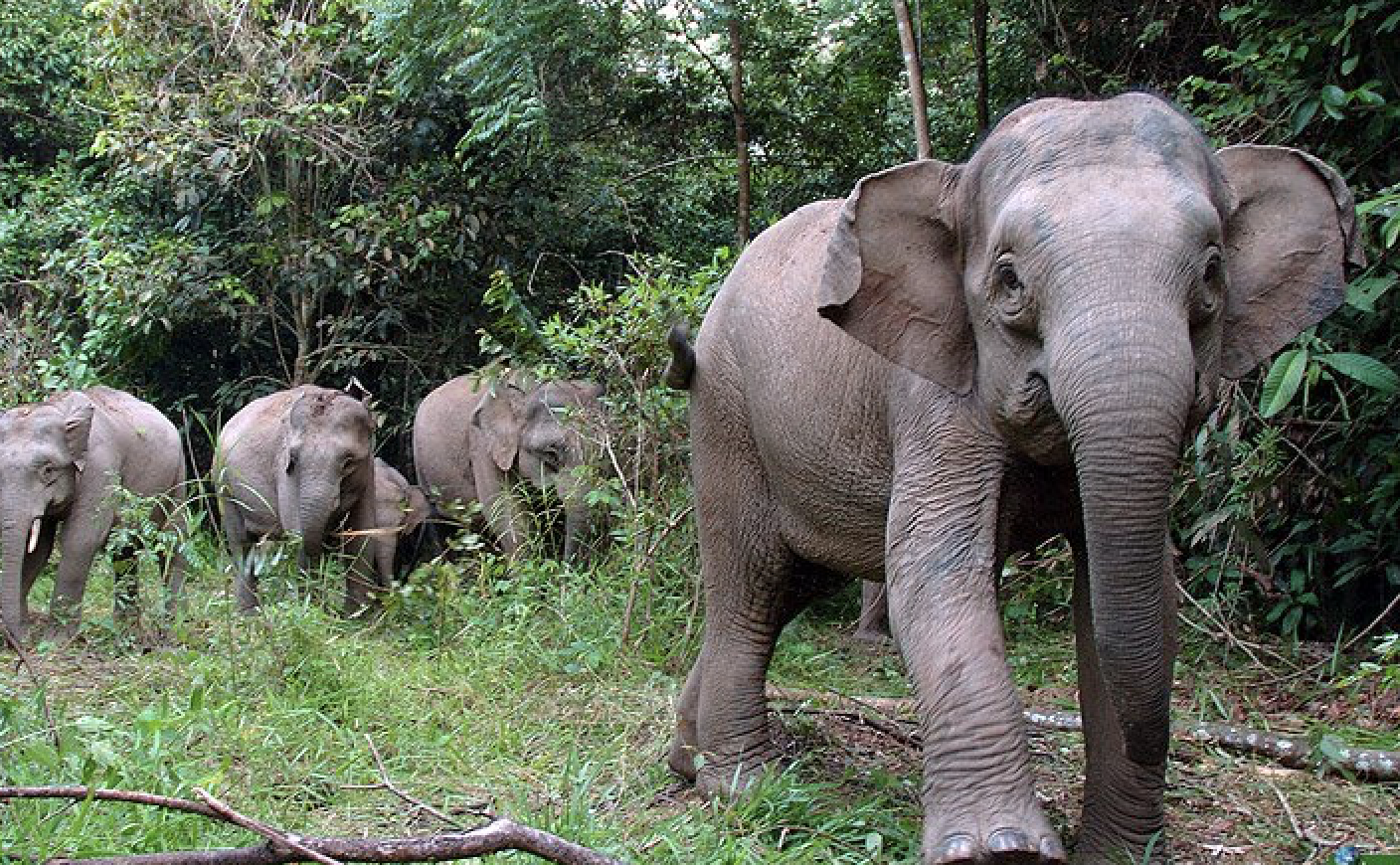
Vivanova People - An Interview with our Club Partner Katerina Pirelli-Zucchetta - Saving the Borneo Pygmy Elephants

Often seen networking at our international events, the beautiful and charismatic Kat Pirelli-Zucchetta is dedicated to saving the Borneo Pygmy Elephants. Our Club Vivanova Intern Deniza Marcinkeviciute from the International University of Monaco spent some time with Kat to find out more about the passion and the drive behind this charitable effort and the Borneo Wildlife Preservation.

Book online for the Enchanted Forest Charity Dinner - Fairmont Monte Carlo
Saturday 18th June 2022 . 7.30pm

When and where was the first time you saw and interacted with a Borneo Pygmy elephant? What effect did it have on you?

I first heard about Bornean Pygmy Elephants about 20 years ago when I was working with elephants in Africa.  They came up in a simple conversation and it was at that time that I became intrigued to learn more about them.  I began watching David Attenborough documentaries and began my own research on the most biodiverse island in the world in which they live, Borneo.

Over the years I noticed that this species of elephant was continuing to decline in numbers due to habitat loss and human-elephant conflict.  Currently, there are less than 1000 surviving in the rainforests.  It wasnโ€™t until 2014 that I had the opportunity to travel to the island of Borneo and observe them in their natural habitat. 

The first time I saw these small elephants they were feeding on grass along the Kinabatangan River, I felt so fortunate to see so many of them as oftentimes you can look for days and not find any. That first day was also very profound as I witnessed human-elephant conflict and realized what these elephants endure daily. I felt so much compassion for them that I knew this was where my future work would be focused.  Hence I started a 501(c)(3) public charity in the United States and shortly after France.

Could you describe in a few sentences what is your daily routine with the Borneo Wildlife preservation and the effort that it requires?

These days there are many non-profit charity organizations and obtaining grants and donations has become increasingly difficult.  We focus a lot of effort on social media fundraising but also, I feel it important to maintain a good working relationship with positive daily communication with my team and conservation partners in Borneo. I am also a part of an international elephant network where we share sustainable solutions for conservation, protection, husbandry training, and environmental issues.  Currently, there are 22 elephants in human care in Borneo and Borneo Wildlife Preservation works to ensure all these elephantsโ€™ basic needs are met.

As we work in Borneo twice a year, I coordinate with other professionals to bring inspiring presentations, demonstrations, education, and elephant care to the locals.  We work directly with the local students and elephant handlers.  

Do you take care of elephants all around the world or only in the Asian continent?  

We only focus our efforts to take care of these elephants which are exclusive to the island of Borneo.  They are an Asian elephant subspecies also known as Pygmy elephants as they are the smallest elephants in the world.  Their small size suggests that they have adapted to their environment, the rainforests of the Malaysian side of Borneo. 

How important is it for the general population to see elephants and be encouraged to care for them?  

As an environmental and animal advocate, I feel it is very important that people learn about not only Bornean elephants but elephants worldwide.  Seeing them in person can be inspiring and motivating for people who want to get involved and protect them for future generations to appreciate.  Witnessing firsthand the beauty of these animals interacting, people will naturally want to protect them. 

Our planet is becoming more and more populated and natural resources for the survival of elephant species are becoming more limited. Positive human intervention will create a new future and better outcome for the survival of these majestic ancient animals.  

What first inspired you to focus your research on elephants?  

With an established professional career working with Exotic and Domestic animals over the last 20 years I knew quite a lot about elephants from school. Their high intelligence and strong family bonds were always intriguing to me.  I think that when I founded Borneo Wildlife Preservation, it was the right time to give back and aid this species to the best of my ability.  

What surprises you the most about what you are doing now?

The increasing interest BWP is receiving from our events in Monte Carlo is very exciting.  Each year after presentations or fundraising events we receive emails and phone calls from interested persons wanting to know more about the island of Borneo and what they can do to help aid the elephants and which I am grateful for. 

Do you have any recommendations for people who want to help elephants in need?

I would urge people to donate to wildlife organizations like BWP and to get involved by just talking about these issues to others.  I recommend people read product labels and only purchase products that are sustainable to the environments where elephants live.  Many rainforests are destroyed by logging and the expansion of oil palm plantations.  One example is to only purchase sustainable palm oil products if any at all, where you see an RSPO  (Roundtable of Sustainable Palm Oil) logo.

Are you planning to invest in new immersive technologies like virtual reality to further reach out to your audience?  

We believe at BWP that the metaverse immersive experience is a good way to distribute knowledge, education, and experience.  So yes, we will somehow sponsor camera initiatives to get more wildlife content. 

For more information, contact Kat through the Borneo Wildlife Preservation website.
www.borneowp.org

We thank Deniza Marcinkeviciute (International University of Monaco) for hosting the interview.